
 Linkedin

 Facebook
 Email
 more






Our Four Pillars
Our 2025 performance and progress across governance, people, environmental stewardship, digital enablement and client value.

People
Ethical conduct, talent development and an inclusive, supportive workplace.

Clients
Client service quality and trust, regulatory compliance and risk management and stakeholder engagement.

Technology
Digital enablement, data privacy, cybersecurity and environmental footprint management.

Solutions
Knowledge sharing, efficiency, effectiveness and resiliency.
Key Highlights from 2025
The results that matter most, from how we use resources to how we develop our people and uphold our standards.

Paper Avoided Up 65%
An estimated 1.65 million sheets of paper avoided through electronic workflows and digital documentation.

23% More Training Hours
10,656 hours of learning and development delivered to 184 colleagues, averaging 57.9 hours each.

Zero Incidents
No incidents of corruption, bribery, discrimination or substantiated data privacy breaches were recorded.

1,863.09 tCO₂e Total Emissions
Scope 2 emissions fell 3.03% while Scope 3 rose 20.98%, bringing total emissions up 1.57% on 2024.
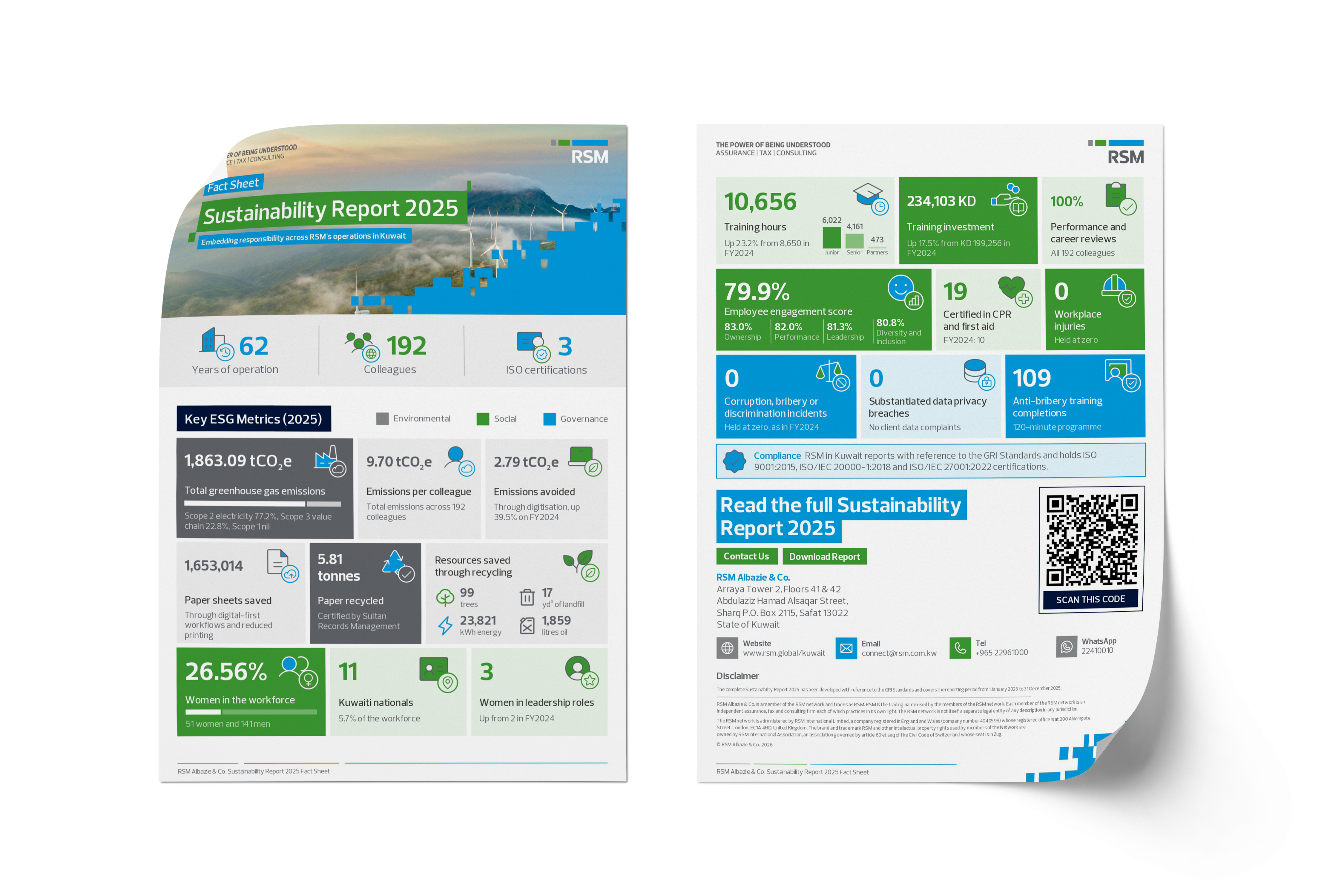
Sustainability Fact Sheet 2025
Receive a two-page summary of the sustainability metrics and milestones that matter most. It offers a quick view of our annual performance and a simple way to share our progress with stakeholders.

Our Approach
Sustainability at RSM in Kuwait is guided by a simple principle. Sustainable performance comes not from standalone initiatives, but from governance, capable talent, responsible operations, trusted client relationships and the effective use of technology working together.
Our priorities are set through a Double Materiality Assessment, which considers both our impact on people and the environment and the financial significance of sustainability topics to the Firm. The outcomes shape our strategy, our KPIs and the way we report.
Eight material themes
These themes guide where we focus our resources and how we measure progress.
How We Identify What Matters
The assessment followed four steps, designed to be proportionate to the size and business model of the Firm.

Topic identification
We reviewed the material topics from our 2024 report, benchmarked peer professional services firms and considered emerging ESG themes.

Stakeholder engagement
We mapped our value chain and gathered input from employees, management, clients, regulators and business partners through structured surveys.

Impact and financial materiality
Each topic was assessed for the severity and likelihood of its impact and for the risks or opportunities it could create for the Firm.

Consolidation
Survey scores were consolidated and plotted on a Double Materiality Matrix, bringing 16 priority topics together into eight themes.
Our Sustainability Journey: Previous Reports
Browse our earlier sustainability reports to see how RSM in Kuwait has advanced its ESG journey, strengthening governance, investing in our people and increasing our positive impact in the community.
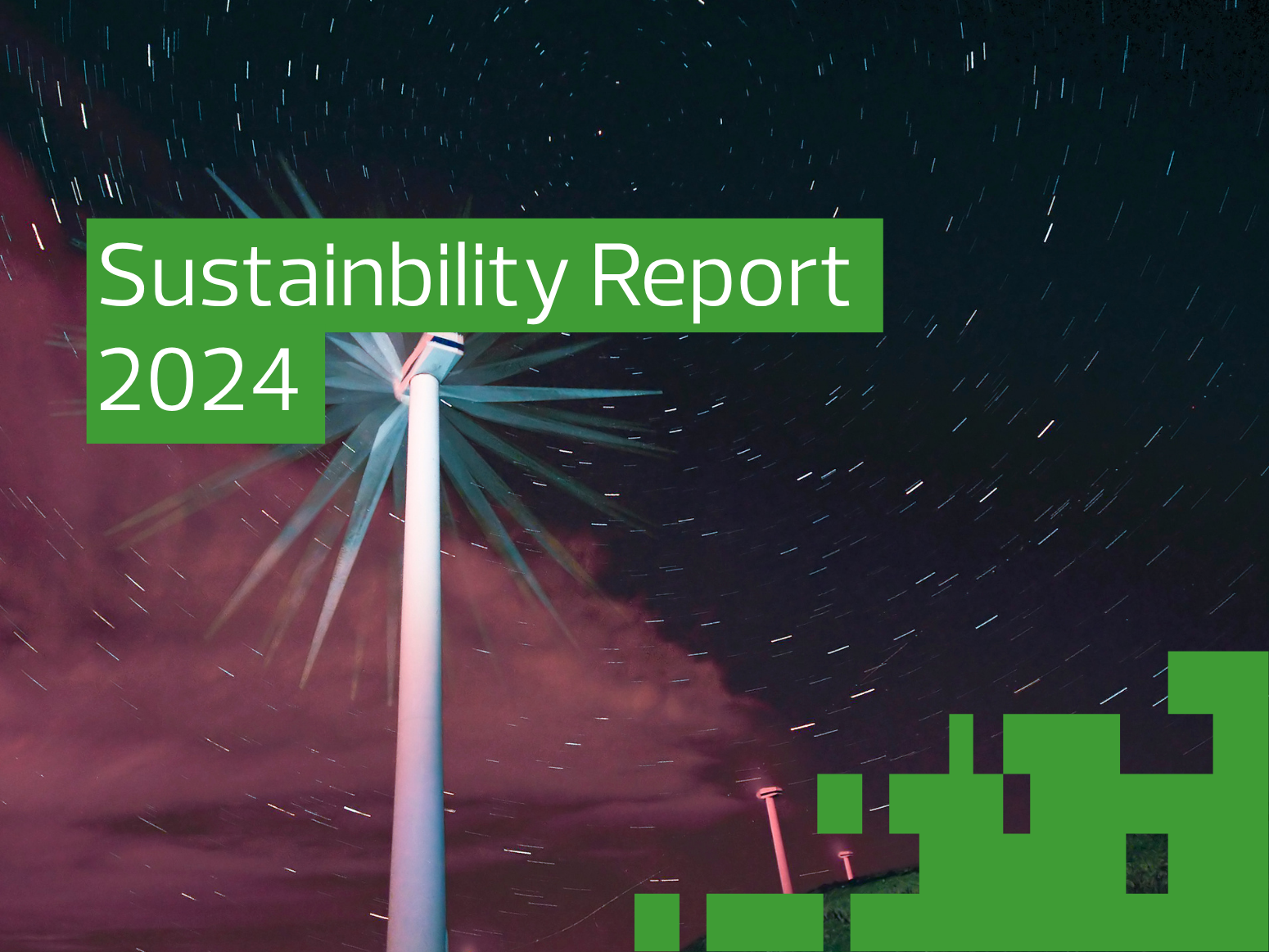
Sustainability Report 2024
“Sustainability: Reflection of Ongoing Commitment” prepared with reference to GRI; highlights digital transformation and a 37% reduction in paper consumption.

Sustainability Report 2023
“The Power of ESG” aligned with GRI and the UN SDGs; highlights progress in emissions intensity, learning and development and local supplier engagement.

Sustainability Report 2022
“Leading by Example”, the fourth sustainability report from RSM in Kuwait, is aligned with the GRI Standards 2021. It details the Firm’s ESG efforts for 1 January to 31 December 2022.

Sustainability Report 2021
“Leading Sustainability by Example” outlines key ESG efforts within RSM in Kuwait for the reporting period January 1 to December 31, 2021.

Sustainability Report 2020
“The Power of Being Resilient” prepared in accordance with the GRI 2020 Standards, reaffirming RSM in Kuwait’s commitment to transparent, annual ESG disclosure.

Sustainability Report 2019
“The Power of Being Sustainable” prepared in accordance with the GRI 2019 Standards, marking the first step toward structured ESG reporting and accountability.