
 Linkedin

 Facebook
 Email
 more

The most valuable AI use case is not necessarily the one that saves the most time, but the one that addresses the biggest bottleneck in the overall business process.
In the first article, a customer disputed an invoice because the price differed from the agreed terms. Accounts receivable checked the invoice, operations reviewed the order, and sales searched for the agreement. This example gives us three possible AI investments: gathering evidence, drafting a customer reminder or preparing receivables commentary.

Find what is holding up the process
Trace representative disputes from the customer query to an approved resolution. Separate active handling time from days spent waiting for information or a decision. If finding the correct agreement causes most of the delay, evidence gathering deserves attention. If complete cases wait for approval, faster retrieval may do little to shorten resolution.
Check what the ERP already supports, including dispute queues, searches and reminder rules. Finance and operations must establish which terms apply and who can approve a correction. IT must confirm where the supporting records sit and how they can be accessed. This distinguishes opportunities for AI from configuration gaps, poor data or unclear handoffs.
The ERP remains authoritative for invoices, payments, credits and balances. Financial changes continue through its approval and posting rules.
Compare three opportunities against the same objective
For this example, the objective is to resolve recurring pricing disputes sooner. Each candidate offers value, but affects a different part of that process.
AI use case | Potential value | ERP and finance judgment | Main limitation |
Gathering dispute evidence | Link invoices, orders, agreements and correspondence in a summary with sources. Could shorten investigation and handoffs. | Match the customer, product, effective date and agreement version. Confirm access to the evidence and who can approve a correction. | Missing or conflicting terms need investigation. A useful summary does not authorize a price adjustment. |
Drafting a customer reminder | Reduce writing effort and make communication more consistent. | Check balances, receipts and dispute status together. Decide whether a reminder is appropriate and what existing reminder rules already cover. | A faster message cannot settle an unresolved price dispute. Customer commitments still need approval. |
Preparing receivables commentary | Help finance prepare management explanations and highlight items needing attention. | Reconcile figures and reporting definitions. Support explanations of late payment with dispute records. | An aging report shows overdue balances, but may not explain their cause. Commentary does not resolve the underlying dispute. |
These are proposed uses; confirm capability availability and integration needs in the applications you run. Any agent retrieval or case routing must stay within approved permissions, with incomplete cases referred to their owner.
Evidence gathering is the first candidate to assess when locating the correct agreement is the main obstacle. Limit the scope to one recurring exception type and confirm a worthwhile benefit after review and operating costs. Reminder drafting and commentary remain on the shortlist; their priority may rise where communication or reporting is the main bottleneck.
Test the investment case before committing
Bring finance, operations and IT together to assess the candidates using representative cases and four questions.
Where is the value?
Establish case volumes, handling time, days to resolution and rework. Compare candidates against the same outcome and avoid counting the same saving twice.
Can the team deliver it?
Verify existing capabilities and licenses, access to the required evidence and data quality. Record gaps for the readiness assessment before committing to implementation.
How much review remains?
Name the evidence reviewer and decision owner. Include time for corrections and escalation; cases with missing evidence or unresolved judgment stay with an investigator.
What will it cost?
Include data preparation, integration, licenses, usage, training, monitoring and ongoing support. Compare total cost over the same period against the expected process improvement.
Using the first article's illustrative baseline, suppose all 300 monthly cases were eligible and total handling fell from 12 to 8 minutes per case. That would release 20 hours a month: 300 × (12 − 8) ÷ 60. Both timings must include review, corrections and failed attempts. This is a capacity estimate to test alongside quality and rework; cash savings require an actual reduction in spending. Earlier payment is a separate hypothesis to test against comparable cases. It changes cash timing, without creating additional sales revenue. Assess that working-capital benefit separately, avoid double counting and weigh the benefits against implementation and ongoing costs. The real business value depends on how the released capacity is used- for example, resolving more disputes, managing more customer accounts or reducing the time to collect outstanding receivables.
How RSM supports this investment decision |
| This article sits in the Strategize / Plan stage of the RSM AI lifecycle, focusing on identifying, evaluating and measuring use cases before assessing readiness for implementation. |
Figure 1. RSM AI services across the enterprise AI value lifecycle. |
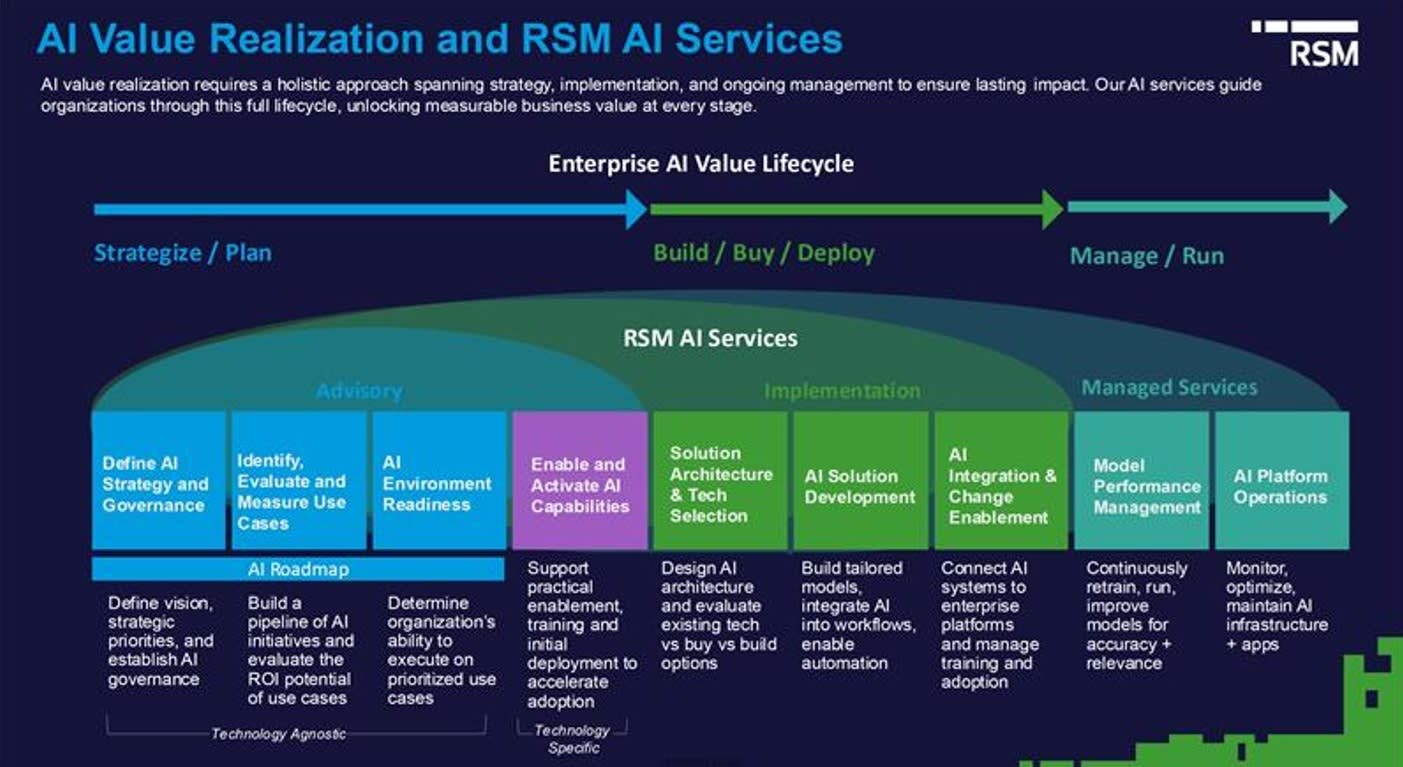
RSM combines ERP and finance process expertise with AI use-case evaluation. We assess how application records, business rules and handoffs affect the outcome before recommending where to invest. Contact our team for an application and process use-case prioritization workshop. Bring your application inventory and representative disputes to agree a candidate, its owner, a baseline and the readiness questions that need answering.
The next article examines whether your existing ERP, data and integrations can support the selected pricing-dispute use case.
The first AI investment should target the bottleneck that matters most to the business — not simply the task that is easiest to automate. The real test is whether AI improves the end-to-end process after review and operating costs, and whether the capacity it releases is put to productive use.