 Linkedin
 Facebook
 Email
Email more
more
To reduce your impact on the environment, an energy transition will be needed.
Why make this transition?
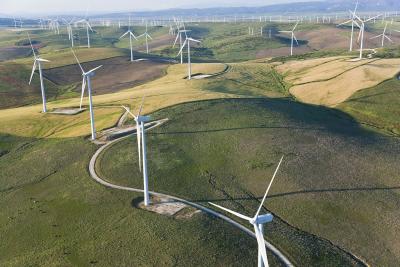
Energy transition is the shift from fossil fuels to renewable energy sources such as wind, solar, hydro, geothermal, and biomass. The transition is crucial to limit climate change and reduce greenhouse gas emissions. Fossil fuels have been the primary source of energy for centuries, but they have a significant impact on the environment. The burning of fossil fuels releases carbon dioxide and other greenhouse gases into the atmosphere, leading to global warming and climate change. Renewable energy sources, on the other hand, are clean, abundant, and sustainable. They do not produce harmful emissions and are less damaging to the environment.
Energy transition is more than decarbonisation
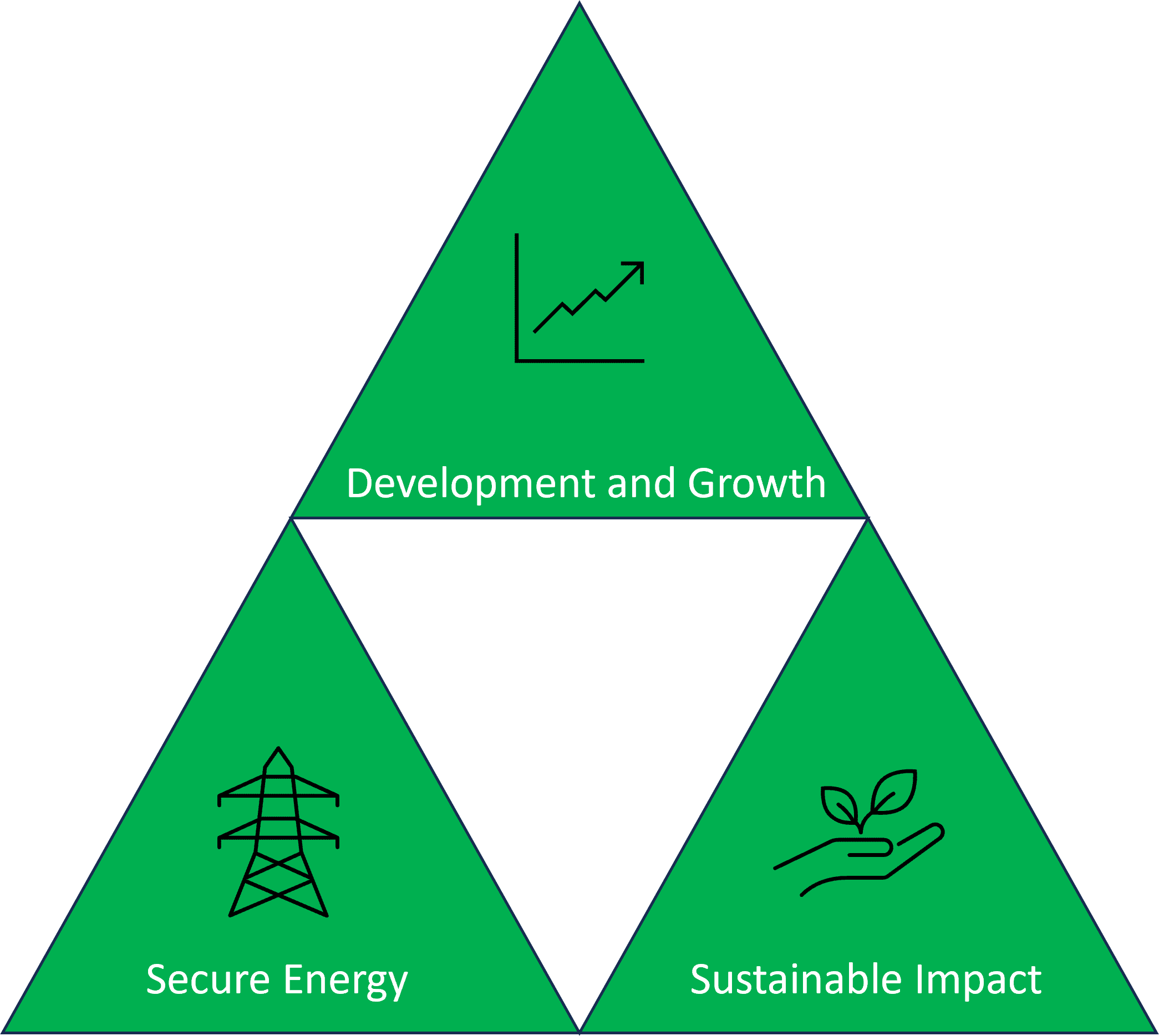
Although the current energy transition is mainly driven by environmental sustainability concerns, it will only succeed if it simultaneously provides energy security and facilitates economic growth and development. In other words, a successful energy transition needs to balance the triangle of energy.
Time is essential
To achieve the goal of limiting global warming to 1.5°C as set by 2015 Paris Agreement, we need to have solutions that are operational in the years to come. The ‘spend budget’ on anthropogenic emissions will be due within 10 to 17 years if no transition is made.
Switching energy
The first part will be the transition from coal and petrol to renewable energy, to mitigate the company’s emissions from power generation and transport. The difficulty will be transforming the heavily polluting sectors like those mentioned in the CBAM. They have a big impact on the environment and have very few options to mitigate it. But… it is doable.
Clearly, there is room for improvement on the part of energy producers and providers.
Firstly, governments play an important role in a country's energy strategy. In some countries, the government and the participants on the energy market are moving to non-fossil energies to produce electricity.
In any case, it is important that companies use a good and reliable mix of renewable energy and implement solutions like a power purchase agreement (PPA) in their strategy.
One solution for all?
The solution for net zero will be achieved in more than one way, such as working on energy efficiency, developing alternative energies with lower or no emissions, or capturing unavoidable emissions through carbon capture and storage solutions (CCUS).
Everybody
Everyone will need to contribute and each effort is valuable. Changes in habits, moving to new technical solutions and circularity will be the base of success. Change management skills will be essential to navigate this energy transition.
At RSM, we help you to find the most suitable solutions for your organisation on the path of your energy transition so that you can keep focused on your business strategy.

RSM Sustainability can contribute to the acceleration of your transition
When it comes to their sustainability transition, companies face the challenge of prioritising what to do first: carbon footprint reduction or sustainability reporting.
And are there companies that can provide guidance in both?
At RSM Sustainability we are convinced that climate ambitions and the sustainability reporting are linked. To have a high-quality and balanced sustainability report, the quantitative information, such as the carbon footprint and the qualitative information, such as information about business policies need to be expressed with the same importance.
For example, we are convinced that qualitative information about the carbon footprint or the energy use of a company needs to be supported by qualitative information like strategic business goals, transition plans and by operational actions.
Carbon footprint reduction and sustainability reporting go hand in hand.
At RSM Sustainability we can guide you as a strategic partner both in the more technical aspects (e.g. calculating the carbon footprint, analysing the energy streams, or providing tailored training to your teams) and in translating all this information into a strategic and compliant sustainability report.
In turn, the sustainability report will be part of the management report where ESG and financial information are connected.
RSM’s extensive experience in assurance adds value to this guidance we offer. We base ourselves on well-established methodologies, a rigorous approach and well-defined goals.
In short, by being able to assist with the technical AND reporting components of the ESG process, we offer a one-stop solution to unburden you and your teams as much as possible.