Linkedin
 Facebook
 Email
Email more
more


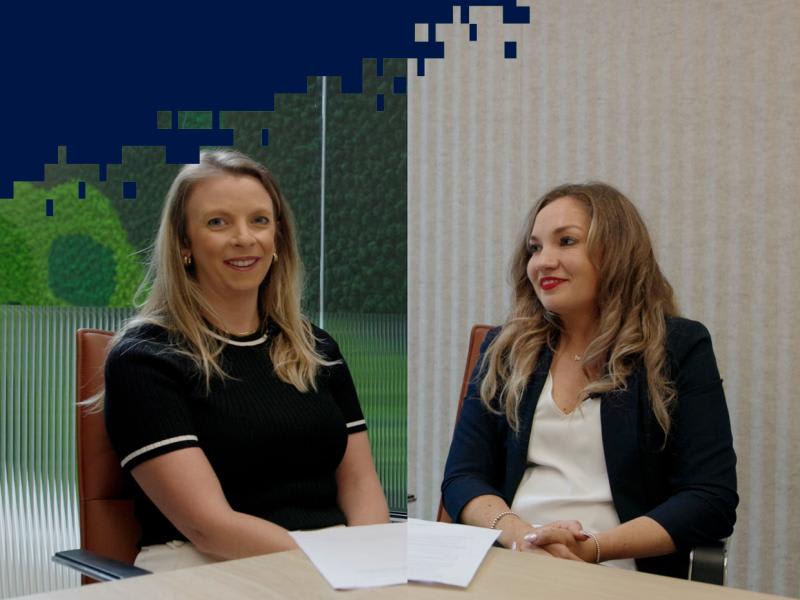
In this episode, Jess and Aimee unpack the complexities of business combinations under AASB 3.
They explore what companies need to consider when acquiring another business and how to navigate the accounting and audit challenges that follow.
Learn how to identify whether a transaction qualifies as a business combination, recognise and measure goodwill, and assess the fair value of assets and liabilities - including those tricky intangible assets like brand and customer relationships.
Key takeaways:
- Understanding when a transaction meets the definition of a business combination under AASB 3.
- Recognising and measuring goodwill accurately, including completeness of liabilities and contingent consideration.
- Engaging external valuers early to identify and value intangible assets and fair value adjustments.
- Preparing clear documentation and disclosures to support audit readiness.
- Collaborating with auditors throughout the transaction to ensure smooth year-end reporting.
Whether you’re a CFO, financial controller, or audit committee member, this episode offers practical guidance to help you manage acquisitions with confidence, avoid common pitfalls, and ensure your next business combination stands up to audit scrutiny.

Episode 5: Business combinations - Mergers and mix ups
The episode explores practical tips for management to prepare for a business combination, including early engagement with auditors, understanding the requirements of AASB 3, and ensuring complete disclosures in financial statements. Watch now to gain practical tips and avoid common pitfalls in your next business combination.

READ OUR FEATURED ARTICLE
 | Common accounting challenges in business combinations Jessica Hishon and Aimee Whittingham | 6 min Discover the complexities and challenges of business combinations and how to apply AASB 3. |
READ TRANSCRIPT
Jess:
Hi everyone, welcome back. Happy to have you all back today to experience our next episode in the RSM Audit Unlocked series. We're excited to have you here. I'm Jess, a Director in the RSM Brisbane office, which is where we're actually hosting the show from today.
Aimee:
And I'm Aimee. I am a Partner from the Melbourne office.
Jess:
We'll be your co-hosts as we explore the world of audit and assurance, everything from technical updates to career journeys and hot topics in the profession, and some of the behind-the-scenes that make audit so interesting.
Between us, we've worked across a number of the RSM network firms from the UK to the US and obviously Australia. This has given us firsthand insights into how audits are approached around the world and given us lots of opportunities to make relationships along the way.
Whether you work for an ASX company, a not-for-profit or in a fast-growing start-up, we know that financial reporting comes with its fair share of complexities, and we want to make life a little easier.
In each episode, we'll be unpacking what auditors are really looking for when it comes to complex accounting areas and providing you some advice on what the common issues are that we see and how to tackle them early.
So whether you're a CFO, a financial controller or a member of the audit committee, this series is for you. Let's help level up your next audit and make financial reporting feel a little less daunting and maybe, a little bit more fun.
Aimee:
Of course, Jess, always.
Jess:
Now today we're covering all things business combination.
Aimee:
Another exciting, complex topic.
Jess:
Very complex, yes.
Aimee:
So suppose when you are purchasing a business as a company, it's always really exciting, but it can be a stressful time and really challenging.
And one of the challenging things is around how do you account for it in the financial statements. And this can be a complex area to navigate.
Look, we could talk about this all day, but we've only got 10 minutes. Jess and I have seen plenty of business combinations, seen a lot of common issues.
So today we're going to cover common issues, pitfalls, and how companies can be prepared to be able to successfully navigate through the transaction.
So Jess, are you going to get into the nitty-gritty of the accounting standards?
Jess:
I sure am, Aimee. Here we go, a little bit of technical jargon for you for a minute.
So at a high level, a business combination occurs when one company gains control over another. This is governed by AASB 3 in Australia, which mandates the use of acquisition accounting for this type of combination.
Per the standards, a business combination comprises or is in existence when there are inputs and processes that work together to lead to an output.
While outputs are common, it's not necessary, but it is really important to have that input and process phase to really get something out of what you're acquiring.
At a minimum, a business must include an input and a substantive process that go together to significantly contribute towards creating future outputs.
Aimee:
OK, amazing. And I think when it doesn't cover the business combination standard, then the good thing for companies is that generally the accounting is a lot less complex.
Jess:
So Aimee, I know you've seen your fair share of business combinations at this point in your career. What would you say are the most common issues that come up?
Aimee:
Okay, we've got three main audit challenges that we're going to briefly discuss today.
First one is recognising and measuring goodwill. So goodwill is the residual between the consideration and the net asset. So any excess is recognised as goodwill. The challenge is around measuring that goodwill.
One of the main things that I have seen is around making sure the fair value of the assets and liabilities are measured appropriately. But are all assets and liabilities included? Especially so when you're looking at business combinations, the real risk here is completeness. Have all liabilities been included?
So warranties, contingent liabilities, any employee provisions, because a lot of the time they say employees are not included when it says that in the standard.
And look, also the other main thing consideration, could just be a plain vanilla business combination, but with a lot of them, what I've seen generally includes equity, includes contingent considerations, so earn-outs, and sometimes it might even include options.
Jess:
Exactly. And let's not forget the residual at the end of the day, goodwill, and that every year it has to be assessed for impairment.
Aimee:
Generally with that, you have the significant risk. Then you've got the significant risk of business combinations and the impairment of goodwill.
Jess:
Correct. So now let's move on to something that trips up people a little bit, intangible assets. These can be tricky, right?
Aimee:
Oh, absolutely. Because although goodwill is a residual, what you need to do in the measurement period, so 12 months after the date of acquisition, you need to do an identified intangible asset valuation, which is usually done by an expert valuer.
This can be timely and expensive, but is required especially when you know that intangibles have been acquired as part of your business combination.
This reduces your goodwill, because then you recognise intangibles on your balance sheet. So this could be things like brand, customer relationships, internal IP. They can, of course, be very difficult to value, hence why you include the external valuer.
Jess:
Leading into the next point around assessing fair value of acquired assets and liabilities. Do you want to hash that out a little bit more?
Aimee:
Yeah, absolutely. And look, so you've got the fair value of the intangibles, but then sometimes when you've purchased the net assets of a business, they're not always at fair value.
What's a good example of that? That includes things such as land and buildings and maybe even the debtors that you acquired that are not recoverable.
So, exciting topic and it's really important to highlight as part of this because it's generally an audit adjustment that we've seen around deferred tax liabilities and the impact of this on business combinations.
Because of the fair value, that creates a deferred tax liability because the tax base is generally nil. So for fair value adjustments as well as intangibles, this creates a deferred tax liability that the company needs to recognise on the balance sheet.
Jess:
And I think you mentioned it before, but a lot of the time management need to consider engaging an external expert to assist in these valuations.
Aimee:
Yeah, exactly. So this needs to be independent, it can't be the same firm who is doing the audit. It needs to be a separate valuer, and it takes time and can be quite expensive. Therefore, you really need to do it at the start of that measurement period to make sure that that whole process has been completed.
Jess:
Now that's great , and what are some of the common pitfalls you have seen?
Aimee:
Well, look, I think we briefly mentioned: is it actually a business combination per the standard? Which can be good for companies, because if they're just acquiring an asset, then it means that you're just recognising an asset on your balance sheet rather than having to recognise goodwill, because that completely transforms the way your financials look.
And then it would be consolidated into financial statements.
So we've also got: have all liabilities been included, including employee provisions and warranties, as I've already mentioned; missing any deferred tax liabilities; getting the acquisition date wrong can have a big impact on how much goodwill is recognised.
Because if you do have equity consideration, then the equity consideration needs to be fair value at the date control passes. If this date has been recognised incorrectly, then goodwill could be materially misstated.
One of the things I've seen recently in a few different examples is who is actually the acquirer.
Jess:
Yeah, we had a good conversation about that this week as well. Tricky stuff.
Aimee:
Yeah, so we're not going to go into depth around who is the acquirer. But if there is a topcoat which has been put on top of the group to acquire the group, then this doesn’t as per the standard mean that they are the acquirer. Within the standard, it says generally the acquirer could be the business itself or a different company.
Jess:
A parent entity, they're up the chain. Well, Aimee, I think that was a nice little summary snapshot of all things business combination. But I suppose, just to finalise things on this end, what are some top tips you have for management and audit committee members around how to ensure that they're prepared for this?
Aimee:
Great question. Look, even though we generally do the audit in two parts, planning and year end it's really good to speak to the auditors even whilst you're going through the transaction, so you understand what the implications are to the financial statements.
It's good for the finance team to understand the requirements of AASB 3 and prepare a paper for us to review, rather than us going through it as we're auditing.
Reviewing the agreement in detail to make sure all liabilities have been included in the goodwill calculation. Understanding when control passes. Have you lined up an expert valuer? Have you given yourself enough time to be able to finalise the acquisition accounting?
And one of the main things that we generally see omissions around is disclosures.
Jess:
They can be really detailed too. There's a lot that goes into those, and you don't do them every year, so it's difficult to keep up to date with what needs to be in there.
Aimee:
Exactly. The standard is very prescriptive around that.
Jess:
No, that's been great, Aimee. And I think for our viewers out there, there's more details, tips and tricks in the article that we've attached to this link.
If you've got any questions off the back of today's episode, feel free to reach out to myself or Aimee, we'd love to hear from you.
If you found the episode helpful, we'd really appreciate it if you shared it with people that you think would benefit from it.
Our next episode is a good one, we will be unlocking top tips around capitalisation of software development costs. So it's set to drop next month, keep an eye out for it.
Thanks for tuning in. See you next time.