
 Linkedin
 Facebook
 Email
Email more
more

Make financial planning the new years resolution you keep in 2026
Is your financial plan ready for 2026?
The beginning of a new year is a perfect opportunity to take stock and ask yourself: are your finances truly supporting your ambitions and life goals?
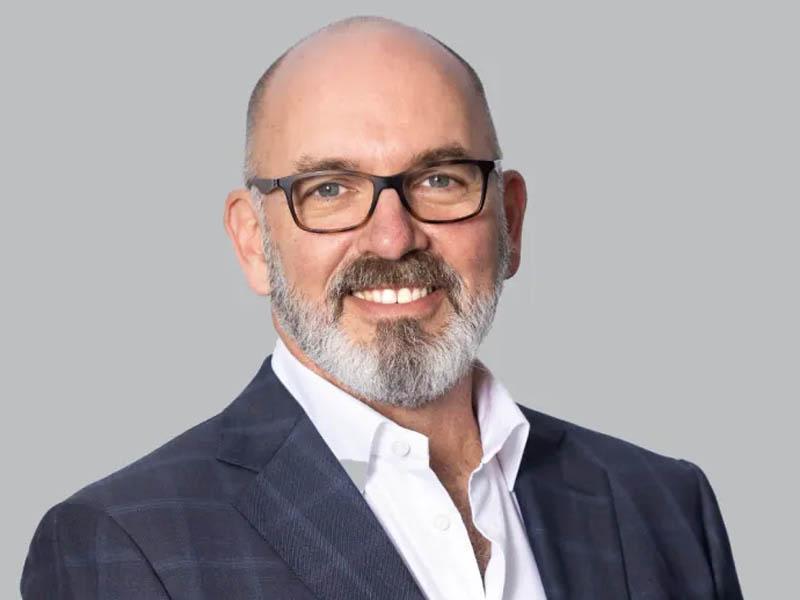
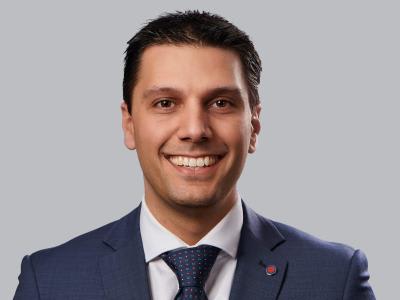
In this episode, talkBIG, host Andrew Sykes is joined by RSM's financial experts, Grace Bacon and Robert Zammit, to explore practical strategies for future-proofing your finances and setting up your super for a comfortable retirement.
What steps should you take now to ensure your money is working as hard as you are in 2026?
From setting financial goals to modern retirement trends and estate planning essentials, our experts share their wisdom to help you navigate life’s ups and downs and hopefully come out ahead.
If you want to learn more about securing your financial future, don’t miss this episode of talkBIG.
Key takeaways
- You need to find the balance between the financial and the personal to achieve a happy retirement.
- Everyone has different comfort levels, so it's hard to say what you need for a 'comfortable' retirement.
- Risks associated with retirement include supporting adult children, market fluctuations, and health-related expenses.
- Modern retirement often includes retirees working part-time or in consulting roles to stay connected and engaged with the community.
- There are many strategies for managing mortgages and retirement savings, but it's important to consult with a professional to discuss your individual circumstances.
- There are multiple benefits to starting your financial planning early, rather than late.
- When you are planning your estate, you may wish to consider the potential benefits of gifting assets while you're alive, potentially avoiding future conflicts and tax implications.
Read transcript
Andrew Sykes
The start of a new year is more than a calendar change. It's a natural checkpoint, a moment to pause and reassess priorities. For many of us, and particularly as accountants, it's time to ask, are my finances aligned with my goals? Am I prepared for the opportunities and challenges ahead in 2027? The festive season is also a chance for us to spend more time with loved ones, which may get us thinking about the legacy we want to leave behind. Today, we're diving into the big questions that matter most to those who want to take control of their financial future.
Hello, I'm Andrew Sykes. I've been a business accountant for over 30 years. I talk about business, money and the economy to help you get ahead. Welcome to talkBIG.
In this episode, we'll discuss the key areas you should be considering when it comes to your finances to ensure your investment and retirement plans remain on track. A couple of guests with me today and they are RSM's financial experts, Grace Bacon and Robert Zammit.
Grace is a partner at RSM in our Sydney office and has over 25 years’ experience in financial services and wealth management. Her expertise lies in providing tailored strategic financial advice, wealth management and investment advice. She has a Bachelor of Commerce and Executive Masters of Business Administration and is a certified financial planner. Welcome, Grace, how are you?
Grace Bacon
Andrew, thank you for having me today.
Andrew Sykes
Great to have you with us. Joining Grace is Robert Zammit. He's also a partner at RSM, but he's in the Perth office and he has over 20 years of experience specialising in providing comprehensive strategic financial advice to clients. He has a Bachelor of Commerce in Economics and Financial Planning, is a certified financial planner and sits on the RSM Investment Committee. G'day, Robert, how are you?
Robert Zammit
Hey, Andrew. Thanks for having us.
Andrew Sykes
Alright, 20 years’ experience; you must have started young, mate.
Robert Zammit
I don't have too many grey hairs showing yet, so I'm still holding on to those black ones.
Andrew Sykes
Yeah, well welcome. We'll dive into it and let's have a little bit of a talk about, we mentioned one thing there was retirement planning and I certainly do think that time off over Christmas really makes you think about what am I going to do with retirement?
And you know, as I mentioned I've got 30 years doing this, so a lot of my clients are getting older. And I will say to both of you that one of the things that I talk to my clients about is not retirement, but a decision point.
Biggest question we get asked is: what do we need to do to prepare for a comfortable retirement? What are we doing to get there? We’ll open that up to either of you.
Robert Zammit
I think Andrew, I'll go first, there is, there's two aspects to planning for retirement. There is one, the financial bit, but then there's also the personal bit. There's a lot of people that aren't ready for it personally. What am I going to do with myself after I've put down the tools? So a financial planner can help with helping you, I guess, with the finance bit, but there's a lot of self-work that has to be done on making sure that there's something else after work.
A lot of time in our day jobs and we have to find how we're going to fill that time once we put down those tools. I think for a retirement plan to be successful, there needs to be a balance of those two items and really making sure that there's the wealth and the money behind it to be able to do the holidays, traveling, and making sure you've got a comfortable retirement is really important.
Andrew Sykes
Yeah, I couldn't agree more with that and it's the financial and the personal. So don't just focus on the financial, but structure yourself to get the personal right as well.
Andrew Sykes
But Grace, if I can ask you, because I came in preparing for this, came across a figure from The Association of Superannuation Funds of Australia that suggests that you'd need around, if you owned your home, you only need around $54,000 a year to live on and for a couple would need about $76,000.
Do we think that's realistic?
Grace Bacon
The definition of a comfortable retirement, Andrew, differs for different people. Your definition of comfortable would be quite different to my definition of a comfortable lifestyle. That is probably just a benchmark that The Association of Superannuation Funds of Australia has put out. But most people that we speak to and research shows that many retirees want to retire and maintain the same lifestyle they had while they were working.
So the analogy I use is: the bottle of wine that I would buy would be quite different to the bottle of wine that you might buy. I might be happy with a $30 bottle of wine, but someone else might need to have at least a $50 bottle of wine. So therefore, that definition of comfortable is quite individual and quite personal.
Andrew Sykes
Yeah, so it's very hard to set one standard level, isn't it?
Grace Bacon
That's right.
Andrew Sykes
So probably the process that we would say, it would be a good process to look at your lifestyle now and say how much you want to maintain. Is that the kind of thing that you do?
Grace Bacon
Yes. A lot of the exercises we asked our clients to consider as part of that retirement planning is to really have a think about what that lifestyle will look like and what they envisage they would be doing—a bit like what Robert said earlier is have a look at really consider what are some of the things that you would like to be doing?
Is it travel and what sort of travel would that be? Would that be overseas travel? Would that be domestic travel? Would it be economy class travel? Would it be business class travel? All that would add to the cost of that lifestyle.
Where would you be living? Whether would you be living in metro cities or whether are you moving and downsizing and moving into regional areas? That is all the things that we take into consideration with clients to work out what is the pool of assets you have versus how long are we going to ensure that we can make that last for you to enjoy your retirement.
People are probably thinking, as much time in retirement as they are working. If someone was retiring at 65, given the longevity and people are living much longer, you could be spending another 25, 30 years in retirement, which is probably similar to the time you spent working.
Andrew Sykes
Yeah, I think that's a really good point because a lot of our expectations around retirement were set at an age where people passed away a lot younger, in their mid-60s, whereas we now have a much longer life expectancy.
Andrew Sykes
Which brings me to some of the risks in retirement. I mean, from my point of view, dependent adult children is probably one of the biggest risks in a modern context.
Do you see that need to support adult children impacting on some of your clients?
Grace Bacon
It's certainly a lot more of a common discussion these days, particularly with the cost of living and cost of housing that parents that are retiring are also considering as part of the retirement planning on how they might potentially help their children.
Potentially with gifting some funds away or looking as part of that retirement goal is actually cutting up that piece of the pie of the assets to actually pass some money away or send some money to the children.
Andrew Sykes
Yeah, and Robert, I'll ask you in line with that, what are some of the risks that you see that impact on retirement planning?
Robert Zammit
Well, like you mentioned, Andrew, adult children, right? There's always the bank of mum and dad and the fallback position of mum and dad, even if your children are well off and have set themselves up. What happens if they have a health event or a separation event? That risk has always existed irrespective of the cost of living, right?
Robert Zammit
There's those risks. There's investment and market risks. We've had a really good series of investment returns and a lot of retirees have watched their superannuation and pension funds grow, even though they've been taking money out over the past few years. That doesn't always happen. There are years where markets go backwards and you're taking money out as well. I think it's really important not to compound into the future expecting strong returns all the time.
Health risks as well, you know, we are living longer, but are we living better and what are the costs associated with it as well? And at points in time, there might be a separation due to a health event in a household. That could be very financially stressful and put a lot of pressure on households effectively. All of a sudden you have to manage two households. One might be a household and one might be an aged care. So that can have a major impact to retirement and funding that. They're some of the key risks that we see in people's retirement.
Andrew Sykes
So some of our planning needs to capture that unexpected type of event.
Andrew Sykes
Are you seeing, for either of you, are you seeing more of your clients working part-time in retirement? What does modern retirement kind of look like now?
Grace Bacon
I like to think, well, lot of the clients that are retiring in their 60s are still enjoying having some connections to the professional community. So they are either working part-time or working on a consulting basis. I would say the 60s is the new 50s, where people are still quite healthy and still have the physical and mental energy to contribute to the wider community. Maybe it's not in their profession, but taking on board positions or taking on a portfolio career.
So, we are seeing a lot more clients doing that. I've actually got a client, he's in his late eighties and he's still holding a number of board positions because they enjoy that mental stimulation. I guess retirement is not really a nice word because retirement means that you're actually completely pulling away from society. But realistically, when people are retiring these days, they're a lot more heavily involved in the community.
Andrew Sykes
Hmm.
Yeah, I'd agree with that. 20 years ago, used to see people retire and they would travel or do the garden. Now I've just had one client who's very successful, sold his business and he's commenced a second career as a part-time bus driver. I have another elderly client who is 87 years old, still works a day a week.
So, you wouldn't discount long-term, the impact on your retirement planning for working a couple of days a week., I suppose, it’s a valid part of the plan, isn't it?
Grace Bacon
Yes, certainly a valid part of the planning as well.
Andrew Sykes
Yeah, because that leads into probably one of our bigger dilemmas with retirement planning. Housing, as we've seen, has gone up significantly. There are people approaching retirement age with still with a mortgage. How do we balance between having a mortgage, retirement saving and actual retirement? What are some strategies we can look at there?
Robert Zammit
I think the plan is, in a perfect world, is to retire without any debt. And that plan has to start really early on. It becomes very, I guess, difficult to find a comfortable retirement if you've got a mortgage and living off a restricted income. Putting those plans in place early, I'm talking your 20s and 30s, to start looking at what life looks like when you're 60. It sometimes comes a little bit late when people come and all of a sudden at 60, they start thinking, better work out how I pay off the mortgage. I'm going to retire in two years time or three years time or whatnot. So it's pretty easy to do.
You think about going to the gym, if you go to the gym and you go, I'm going to bench press 100kg all of a sudden, that's very difficult. But if you go, I'm going to start at the 1kg mark and move yourself up there, you'll get there. So I think starting early is one of the key plans and not getting sucked into, I'm going to upgrade the house later in life when I got free cashflow, take another mortgage and instead use some of that free cashflow to start saving away earlier on.
Andrew Sykes
Yeah, so the benefits of compound interest over the long term to increase your savings. I think that's a pretty good principle. So start early, start saving.
Andrew Sykes
So over to you, Grace. Now, and if I can ask, so we've got somebody who's in their early 60s, they can access their super, they want to retire, but they still have a mortgage. Can you compare between taking the money out of super to pay the mortgage?
Or saying, okay, well, I'm going to work part-time a few extra years to pay that off. I mean, from what I've seen, you shouldn't take your money out of super if you can help it, but can you give some advice on that?
Grace Bacon
Yeah, I guess it depends on the individual situation. But generally, when you turn 60, and if you meet certain criteria, you can start a transition to retirement pension. So, if you're starting a transition to retirement pension, and you're taking a minimum pension out of those funds, and you're still working, you can then still contribute money back to super as well. So that's the cycle of where you can do what we call a re-contribution strategy. So, you take the funds out of super, you put it back into, sorry, take it out of a pension account and then put it back into super. Potentially that part-time pension or that pension can also help you pay off your mortgage a little bit quicker. But you're right, if you take too much out of super, you're very limited in what you can put back in. So it needs a bit of strategy around, you know, is taking it out earlier at 60 worthwhile and that's where we do a lot of financial modelling for our clients. Or is it actually better just continue working part-time or full-time until you pay off that mortgage or pay down that mortgage a little bit more over the next five years until you reach 65.
Andrew Sykes
Yeah, because it's very difficult. I will often talk to my clients and I'll say to them the retirement's about income, not capital.
Grace Bacon
That's right.
Andrew Sykes
But you need the capital in your super fund to create the income, don't you?
Grace Bacon
Alternatively, people may need to think about a downsizer contribution, where if they've owned the family home for more than 10 years, and they're over 55, they could sell the family home, release some equity out of that to fund retirement or pay down debt, and then, you know, metaphorically downsize to a smaller property with no debt or lower debt.
And that way they free up the capital and the capital gain they may have acquired in the original home and will use those funds to fund the retirement.
Andrew Sykes
That sounds really good. Can you give us a quick rundown on the parameters or what the downsizer contribution is?
Grace Bacon
Yes, certainly there's three main criteria for downsizer contribution. Firstly, you have to be over 55 to do that. So that's the earliest you can access that you would have to own the family home for more than 10 years. And as a couple, each person or each individual can put in $300,000 into super or and there's a couple up to $600,000 into super. So that's a one off. So you can only do it as a one off in terms of a lifetime limit.
And that downsizer contribution also doesn't add to the other contribution limits that is available in superannuation.
Andrew Sykes
So it's a great way to top up your super and it's a good part of that answer is that maybe downsizing and getting right-sizing your super may be a better way to do it than just working to pay off a mortgage. So, in relation to that kind of horizon around retirement planning.
Grace Bacon
Absolutely.
Andrew Sykes
So Robert, if somebody came to you and said, I want to retire in the next 12 to 24 months. What would be the key things you would look out for in the current environment?
Robert Zammit
Yeah, you'd be looking at the levels of risk that they're taking in their superannuation. Generally, you know, when we're younger working, we've got a stable income coming in the door. We're not having to draw down on our financial assets. So you can afford to take higher risks there. But as you get closer to that drawdown phase where you're going to be taking out, you know, selling investments on a regular basis, a lot of people want to reduce the risks they're taking there. It is all dependent on how much money you do have.
When you've got a lot of money, you can afford to take a lot of risk because it doesn't matter if it halves as an example, because you still got a lot of money. Whilst if you've got not very much, you can't afford to take very much risk because you can't afford to have your money halved. But you need to return their off your assets because of the lower base. So, risk level is really important and what your assets are generating is really important.
Taking assessment of what assets you do have for the drawdown phase. And there's different points in time in a household on when they can access assets. So, superannuation is age restricted. There might be tax issues as well with selling some assets and then really putting in a plan in place, looking at understanding, do you want to draw down on your capital over time?
Do you want your capital to grow over time? What do you want to happen with your wealth when you pass away? These are all the questions that have to be answered in the lead up to retirement.
Andrew Sykes
Yeah, and that's a good segue, but we'll come back to it just before we get to what happens to your assets at the end of your journey. If I was retiring and I wanted to get, say, an income of about $10,000 per month, what kind of balance would I need in a well-managed superannuation fund? What's my target?
Robert Zammit
Yeah, it would depend on how much risk you want to take right there. But I like to work on a 5% return level on your assets and that takes into account inflation, the value of your assets generally staying the same over your lifetime. So, if you want $10,000 a month, it's about $2.4m that you've needed to have accumulated in say superannuation.
Andrew Sykes
Okay, so that is a fair size balance. So we have that range there between the $595,000 from the Australian Superfund Association all the way up to a couple of million.
Andrew Sykes
So, Robert, you did mention there a bit about estate planning. As we all know, estate planning is about structuring assets, managing tax and ensuring family harmony across generations.
What are the key documents and things we need to put in place for good estate planning?
Robert Zammit
So the key documents there are your will, which directs where your assets go in the event of a death.
Your enduring power of attorney, it's who you give appointment of control of your finances whilst you're alive.
There's the enduring power of guardianship, and that gives you health decisions whilst you're alive.
And then there's binding death nomination. So, it's the direction to the trustee of your super fund on where your super fund should be paid to in the event of your death.
So, they're the key documents. But estate planning law is different per state. So, it's really important that you engage with professionals in wherever you're located to make sure that that documentation is done in accordance with your relevant state laws.
Andrew Sykes
Okay, and once we've done that, how often should we get it updated?
Robert Zammit
Hopefully not very often because if you're not doing it very often, it means that you've done it right in the first place. But it needs to be reviewed, I would say, at least each year.
Probably when you need to redo it is when there's been a significant change to either your financial circumstances… Say there's a windfall or you've sold an asset that may have been mentioned in your will, for example. Or when there's a change in your family structure. So, marriage, separation, children, more deaths, these are the points in time where you may decide to redo or at least review your estate planning documentation.
Andrew Sykes
Yeah, okay and look, that's great advice there. And it's really hard to consider estate planning without talking about the great wealth transfer that's slated to happen. So we've been reading a bit in the media about the estimated $3.5tn in assets that are going to be moving over the next two decades as baby boomers start to pass on wealth.
Which will flow through to younger generations who are inheritors, inheritances, business succession and gifting. Now, there is that old saying that wealth never lasts longer than three generations. If you're a holder of that wealth, what should you be doing now to protect wealth through to the second, third, fourth generation?
Grace Bacon
I think what's important to consider is what do you need financially to meet your own needs. We touched on it earlier around retirement needs, but also later life care needs. So, you know, whether you might need aged care down the track because medical costs is expensive, but then also thinking about what can you afford to give away, whether it is now, during your lifetime or after you pass away.
Because it's really important to remember what you gift away you can't get back. So, you know, it's important that you think about whether you're gifting away in trenches or in stages during your lifetime, as opposed to giving away a large sum all at once.
And to protect that in terms of the family lines is whether you consider using tech structures like a family trust or even in through your wills.
You could also have something called a testamentary trust, where the beneficiaries can consider using a testamentary trust to receive those inheritances. And it can then protect them from potential family law claims or even professional indemnity claims. Probably really important if the beneficiaries, like the children, are in professions like ours where you are likely to be potentially sued, or if you're worried about a family relationship, a relationship breakdown is where testamentary trusts can have a role to play.
Andrew Sykes
Or just reckless children who are going to spend all your hard-earned money.
Grace Bacon
That's right, that's right.
And then the other thing is also if you're gifting lump sums away during your lifetime, one of the other ways to protect yourselves is using a loan structure. So, gifting the funds away as a loan, by way of a loan arrangement, and then having that loan relinquish as part of your will and your wishes in the will.
Andrew Sykes
So, you have mentioned there a couple of times, Grace, about gifting rather than letting it flow through the will. What's the difference between gifting now and through the will?
Grace Bacon
Yeah, gifting now is something what we call the living inheritances. And one of my clients who is doing exactly that now he's in his nineties have said that he'd rather be around to see the joy in what his wealth can do. That's his exact words as opposed to leaving it until he has passed away and not quite sure what, you know, where the wealth will end up. So, he believes his children are all very set up financially themselves, but he also wants to make sure that he can help them during his lifetime. That's part of being able to give the funds away during someone's lifetime versus leaving it when they've passed away and then things are passed on as per their estate plan or their wills.
Andrew Sykes
So, it's a very good way of reporting personal and family goals to do that.
Grace Bacon
That's correct.
Robert Zammit
You get the guarantee that the money ends up where you want it to go. So, you get the satisfaction, you get the guarantee. There's less, then, in your will when you pass away, which also reduces the likelihood of contestation of your estate, right? Leaving a really big pocket there is pretty tempting, but leaving a small bucket of wealth in your will is a lot less tempting from a contestation point of view.
Andrew Sykes
Yeah, because we do quite often hear that a significant number of wills get contested in Australia. So, what you're saying is if you gift it while you're alive, you potentially stop litigation after you're gone.
Robert Zammit
That's right.
Andrew Sykes
But as we know, nothing comes for free. And as a tax accountant, I do like wills and estates because there's lots of tax advantages. Robert, if you were to give away all your assets while you're alive, what kind of tax benefits do you miss out on?
Robert Zammit
I guess if you're giving it away today, obviously you might be giving it to children who are working, earning an income. So, they might be holding your wealth, generating an income off that wealth, which might be at higher rates than your personal marginal tax rates. So, there can be tax consequences.
If you're giving wealth away, it might be that you're selling assets as well, which realises capital gains. So it's really important for people to put a plan in place and seek the guidance of the tax practitioners and financial advisers and take a whole of family picture point of view.
A lot of the time when my clients come to me and say, Robert, I'm thinking about giving some of my wealth away today, we actually look at the children's financial situations as well and work out whether it's going to be better off from a holistic family point of view or if we're better off delaying that wealth transfer.
I think it can be dangerous just saying, I'm going to give away money today and then finding, one, you've exposed it to tax consequences and risks. So, it's important to seek advice there.
Grace Bacon
I think it all depends on individual circumstances as well, because whilst Australia doesn't have gift taxes, we have something called capital gains tax. So, anything in terms of a change of ownership in any assets, apart from cash, would trigger a capital gains tax implication. So, it's important to work with your tax adviser and your financial adviser and your legal adviser to work out what's the best way to go about it.
Grace Bacon
Some of my clients prefer to absorb the tax themselves rather than pass the tax problem onto their children. So therefore, they prefer to do it during their lifetime. Otherwise, if children inherit assets through the estate and they continue to hold onto it, whether it is a shared portfolio, or say, property, they end up inheriting the cost base. So, if the parents have held the assets since the 1970s and the asset’s gone up tenfold and the children sells it later on down the track, they may end up having a massive capital gains tax bill versus if it was sold in the parent’s lifetime.
Andrew Sykes
Yeah, so that will depend on whether it's subject to CGT or there's a pre-1985 asset or post. But I think the important thing or one of the important ideas I'm getting here is to talk to your family and say, well, if I leave you this asset, are you going to sell it anyway because you've got a mortgage to pay or do I just sell it now? I'll pay the tax and you can have the net. So I think part of any good planning is that communication, isn't it?
Robert Zammit
Mm-hmm.
Grace Bacon
The transparent and direct communication with the family members involved is important so that everyone is on the same page and it also minimises potential conflicts down the track.
Andrew Sykes
Yeah, not just pursuing or litigation under the will, but conflicts between different family members.
Grace Bacon
And there might be family values about passing assets on beyond the family. So you know, setting up a legacy and setting up a philanthropy strategy to serve causes that are close to the family's heart. And that is part of the conversation that families can have as well, that the wealth is, as you say, won't disappear through the next generation, but, you know, is setting up a legacy for the family.
Andrew Sykes
Terrific. And thank you very much. We're running out of time for our podcast, but we are in the post-New Year's Christmas hangover period for financials. What's a great tip from each of you for our listeners heading into the new year, making 2027 a better year financially?
Grace Bacon
I would say have the end goal in mind. So, it's bit like building a house; envisage what that house looks like and make sure you set up the foundations appropriately. Because making drastic changes once you've actually got assets established can be quite a costly exercise from a tax perspective, but also potentially from a legal perspective.
Andrew Sykes
And Robert?
Robert Zammit
A lot of people ask me, Rob, you deal with clients that have a lot of money. How do they get it? And I say they're planners, right? They plan and they're organised. And this is a great time of year to look forward over the year and look for expenses that you may have, whether they're big milestones or if they're just small ones, birthday parties that are coming up for the children. And I'd say set aside budgets for those. Make sure that we're setting aside money in advance for those.
So, then we don't find ourselves caught behind and, you know, surprise all of a sudden behind on the credit card repayments this month. So, my number one tip would be: use this time to plan for the year ahead and those expenses that are coming up.
Andrew Sykes
Yeah, that's a great one. And I will say in a tighter economy, I think my number one tip is have a look at some of the smaller things, maybe cut down to one coffee a day rather than two. And really importantly, have a look at all your subscriptions, your Netflix and various other ones, decide which ones you want, cut them down. And always remember that if you save $30 a day, that's $10,000 in a year. And it's a good start to saving for next Christmas.
Thank you both for your time today. We've really gone over some points in relation to retirement planning and estate planning. The key point that underlies all of them is on planning. It won't happen without planning. So if you're looking to retire, start your planning, start it early, talk to your advisers and start putting a plan in place. Once you've got a plan in place, can start, you can work towards it.
A quick reminder that everything we've spoken about today is general, not specific financial advice. So, if you want specific financial advice, have a talk to your adviser and they can help you out.
Thank you for joining us on talkBIG today. Thanks, Grace. Thanks, Robert. Really good. If you found this episode helpful, please subscribe and leave a review.
Grace Bacon
Thank you. Thanks Andrew. Thanks Robert.
Robert Zammit
Thanks Andrew.

