

Introduction:
Automation is reshaping agribusiness.
As drones apply fertiliser with pin-point precision, robotic milking systems keep happy cows coming back for more and solar-powered irrigation systems slash energy costs.
The same story is unfolding globally, from robotic harvesters in Europe to AI-guided irrigation in the United States and precision viticulture in New Zealand.
Technology is proving its worth across the agri-sector in Australia.

Automation is key to securing the future of farming in ways that not only improve financial outcomes for agribusiness but also for those working in the sector, as well as the environment.
Innovation increases productivity and efficiency, with automated systems increasing throughput, consistency and data-driven decision-making. It is also improving health and safety. In dairies, where crush injuries are common, for example, automation is putting distance between people and animals, while chemicals are increasingly delivered by drones, reducing the risk of exposure.
Automation enables agribusiness to do more with fewer people or redeploy staff into higher-value work and more interesting work. This also improves retention and lengthens the time farmers can continue on the land.
Labour constraints are one of the strongest economic drivers of automation uptake.
In its 2025 Snapshot of Australian Agriculture, the Department of Agriculture, Fisheries and Forestry (ABARES) shows:

Agriculture employed more than 315,000 people in 2023–2024,
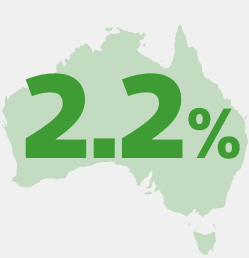
This represents 2.2% of national employment.
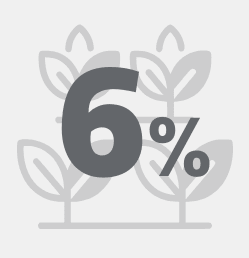
Close to 6% of rural employment.
The report examines the impact of automation and the ways in which agribusiness can leverage innovation to fund a more sustainable future.
We also introduce a new tool designed to help agribusinesses assess the financial benefits of investing in automation.
Automation requires perseverance; systems must be tested, adapted and refined, often over several seasons. But it is essential for the long-term viability of Australian agribusiness.
RSM Australia has been future proofing businesses for more than a century. We remain committed to addressing issues that inhibit unlocking growth opportunities and providing solutions that not only encourage but also enable innovation. F.A.R.M. is another practical demonstration of that commitment.
Automation isn’t just about efficiency and cost savings
It can also mitigate risk in an industry where factors such as rainfall and drought are beyond the control of those working the land. Technology such as tile drainage can protect crops from water logging, enabling farmers to maximise yield and make better use of what land they already have.
RSM’s F.A.R.M. (Feasibility of Automation Return Model) enables farmers to input capital costs, estimate operational savings and calculate payback periods, as well as integrating funding options for investment in innovation.

Sustainability is more than a buzz word, too.
From recycling wash-down water to using waste from breweries as feed supplements, automation integrates with circular systems that reduce waste and improve environmental outcomes.
This builds social licence, along with tech-enabled operations that demonstrate responsible farming practices, strengthening trust with consumers and regulators.
With the value of Australian agricultural production growing from $61.5 billion 20 years ago to $82.4 billion in 2023-2024, these advances have implications far beyond the farm gate. Production improvements become increasingly important as global prices soften.





CONTACT US
CONTACT US