
 Linkedin
 Facebook
 Email
Email more
more
Executive summary
In 2026, Australia's real estate and construction sector presents a familiar paradox: demand has never been stronger, yet capacity to meet it has rarely been more constrained.
This report draws on structured interviews with ten senior leaders spanning development, construction, infrastructure, hotels, and industrial sectors. In their collective view, Australia is a market with enduring fundamentals and real structural problems.
The next decade will be defined less by who identifies the right opportunities than by who can actually deliver them.

Key takeaways

Chronic housing undersupply, persistent labour shortages, declining productivity, rising costs, and tighter capital are combining to make project viability harder to achieve. The result is a more selective market where marginal projects are delayed or shelved

Demand continues to outpace supply, particularly in housing, where affordability pressures are spreading from the major cities into regional markets

Australia retains genuine global appeal. Political stability, rule of law, transparency, and relative safety continue to attract international capital, but that advantage is narrowing due to tax complexity, slow approvals and rising delivery costs

Builders and developers are moving towards early contractor engagement, alliance models and shared-risk structures. Dependable banking relationships have become strategic assets

Artificial intelligence and data analytics are beginning to improve productivity, while sustainability expectations are becoming normalised. Planning and tax reform remain the critical levers for restoring confidence
SUBSECTOR RESILIENCE SNAPSHOT
RESILIENT
Major infrastructure, data centres, residential accommodation, hotels, premium residential
STABLE
Anchored retail, experience-based retail, sub-10,000m² industrial
UNDER PRESSURE
Suburban office, B-grade commercial, large-format industrial, mid-market residential
EMERGING
Modular/MMC residential, build-to-rent, fuel security infrastructure
311K
Net overseas migration
Year to Sept 2025
~25%
Shortfall in dwelling approvals
vs. 240K pace required
$120bn+
Infrastructure pipeline
Over 10 years
Overall, Australia's fundamentals are strong, and demand across priority industries is durable. To protect our global competitiveness, business leaders must pair ambition with disciplined capital allocation and delivery certainty, while policymakers must deliver faster planning, greater policy consistency, and a renewed focus on productivity.

The next three to five years for Australia's real estate and construction industry will be defined by compounding structural pressures. As several interviewees noted, these trends aren’t new. Rather, they are the result of existing imbalances, exacerbated by current market conditions. The following themes capture the forces most likely to define the years ahead.
Housing undersupply and affordability
One topic that surfaced in every conversation is the persistent shortage of homes in Australia. Population growth, whether through urbanisation or immigration, continues to add pressure to a market that is, in the words of FDC Director Cornelius Hart, "seemingly incapable of meeting demand," keeping prices elevated. This shortage is generating real stress for buyers and renters alike, alongside rising numbers of people on social and affordable housing waiting lists.
RSM economist, Devika Shivadekar also highlights this widening gap between demand and supply in the Australian housing market.
Devika Shivadekar

“Population growth of 1.6% in the year to September 2025, with net overseas migration of 311,000, continues to underpin housing demand, particularly across capital cities.1 However, supply remains insufficient: ABS reported 195,434 dwellings approved over the 12 months to February 2026 (original terms), still below the roughly 240,000 homes per year needed to meet the National Housing Accord target of 1.2 million homes over five years.2”
The pressure is pushing buyers into regional areas, where land and housing prices have since risen too, spreading the same challenge across the country.
Labour shortages, capacity constraints, and declining productivity
A persistently tight, capacity-constrained market is driving much of this pressure. Investors, particularly offshore capital, will often see the demand signals, but may not realise how comprehensively the delivery system struggles to convert that demand into built outcomes.
Real estate and infrastructure projects are competing for the same contractors and trades, creating a delivery environment that favours government-backed projects over private developments and adds both cost and delays. Jeff Jones, CFO at Buildcorp, identifies continued population growth, housing undersupply, and skills shortages as the industry's "three biggest rocks." This is compounded by declining productivity, which continues to hamper progress.
Jones notes that tender and decision timelines have doubled over the past three to four years, stretching to 16 weeks "mainly because feasibilities aren't stacking up." Builders, more risk-averse since the pandemic, are reluctant to take on exposure they once accepted, prolonging negotiations as neither party wants to absorb the risk. This may be justifiable; Devika Shivadekar highlights that “construction continues to account for the largest share of corporate insolvencies; consistently between a quarter and a third of all business failures.”
1Australian Bureau of Statistics, National, state and territory population, September 2025 (population growth 1.6%; NOM 311,000)
2ABS, Building Approvals, 2025 annual data (dwelling approvals ~195,000 vs required ~240,000 pace)
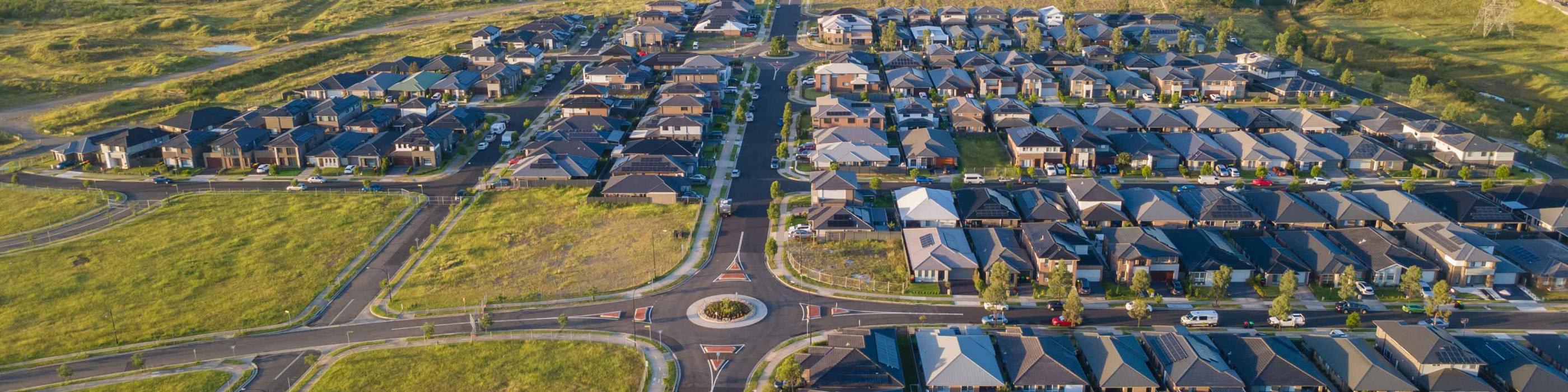
Cost escalation, capital tightening, and viability under pressure
For the first time in years, construction costs have risen to levels that leave some developments no longer viable. Cornelius Hart, Director at FDC, points to supply and demand imbalances, cost volatility, and investor sentiment as the most influential short-term factors, with rising costs affecting multiple subsectors.
Capital availability has tightened as well. Bill Haughey, Partner, Aberdeen Investments says, "In the past 12 months, definitely in the last six months, capital has started to tighten. There is less availability of it at this point in time, and people are looking at their balance sheets and where they invest, being a bit more selective. Projects that might have passed the business case two or three years ago are now being questioned for affordability and feasibility." This has created a more selective investment climate, with rising capital costs leading to marginal projects being delayed or abandoned.
Kenny Ji

“Before COVID, cheap debt and strong presales could make almost any project viable. Today it is all about the developer's execution capabilities, construction certainty, and capital strength. These things matter far more now.”
Planning reform, density, and smaller dwellings
Navigating planning requirements across different states and councils has been historically difficult, making streamlining the approvals phase one of the few levers available to improve delivery.
Governments at both state and federal levels increasingly recognise the scale of the housing problem and are responding with funding, planning changes, and changing building regulations to streamline approvals and fast-track delivery. However, views are mixed on whether these measures will move the dial.
Some are relatively optimistic. Kalvin Yeoh says, “I think the various planning authorities at council, state and federal levels are starting to recognise that planning is quite broken…Hopefully, it helps save time and holding costs as it provides developers get more certainty more quickly on the desired outcome.”
Others take a more cynical stance. Tim Jacob, General Manager – Developments at Parklea, says, “International finance and developers are influencing baseline land values with government intervention continuing to add to cost of delivery of developing land whilst also failing to address authority delivery timeframes.”
Adam Crowley echoes this frustration: "None of this actually assists with supply. There are no initiatives which unlock that planning process and streamline it, and that seems to be one of the biggest impediments to development."
Increased density is another key change. Nicholas O’Neill says, “recent initiatives to open up planning pathways have generated significant potential new supply such as the high density zones put in place by the NSW Government.” This trend was also noted by Tim Jacobs who views the trend toward smaller dwellings as a steady shift away from the traditional "Australian dream." He sees this change as the influence of an increasingly multicultural society on housing preferences.
Larger, more complex projects (once the ambition of growth-oriented developers) are increasingly uneconomic for all but the largest vertically integrated operators. One director noted that the market is bifurcating: those with full funding, construction and delivery capability can pursue scale, while others are finding better risk-adjusted returns in smaller, premium, highly controlled projects.
Modern methods of construction
Modular and prefabricated construction is gaining traction as a solution to cost and timeline pressures. Nicholas O'Neill, Managing Director at Moov Modular, believes modern methods of construction (MMC) are being embraced by construction companies and government entities through volumetric factory building and kit-of-parts. He points to “MMC social housing programs, investments by major corporates such as Wesfarmers in precast concrete manufacturing and major projects like the South Grafton project” as evidence of this growing momentum.
O’Neill adds, “Many companies are looking at Modular and prefab as a solution. This is seen in the NcNab acquisition of ModnPods, the business model of Free Cities who are bringing in Chinese Modular manufacturing for apartment buildings and Wesfarmers and Built establishing a JV to produce precast concrete.”
From a global perspective, these dynamics reflect broader trends across developed markets. The UK, Canada, and Germany all face versions of the same supply-demand mismatch, compounded by planning fragmentation and construction cost inflation. What distinguishes Australia is the velocity of population growth relative to delivery capacity, and the particular complexity of its multi-jurisdictional planning environment.

Australia continues to hold a respected place among global destinations for real estate, construction, and infrastructure capital. The enduring strengths of our political stability and a mature, transparent market will keep Australia firmly on the radar of international investors. At the same time, structural and policy constraints are steadily narrowing the gap with competitors.
A safe, stable, and well-understood market
When it comes to the qualities that draw global capital to Australia, the message was clear and consistent: it’s all about safety.
Cornelius Hart sums it up well, “We are still a fairly stable country, with reasonable economic management and good resources. We are seen by many international investors as a safe place to invest, build and develop.”
One interviewee who prefers to remain anonymous, says, “We still have rule of law. That increases our relative attractiveness when compared to places undergoing regular drone attacks, as an example. There are a lot of things that have gone very well and continue to bode well for Australia.”
For many investors, the proposition is about protecting capital rather than maximising returns. As Kalvin Yeoh explains, “Australia doesn't provide the highest returns, but it's a safe return. So a lot of investors would be looking to, number one, conserve and keep their capital.” Yeoh also notes that Australian real estate remains comparatively affordable against gateway cities such as New York, Singapore, and Tokyo. With uncertainty elevated elsewhere, it's a position Australia should look to make the most of.
Barry Cawthorn adds that sustained capital flows, particularly into industrial, reflect a mature, well-understood market where the country's strengths are already priced in.
Rising costs and less favourable tax policies reducing appetite
Another point of consensus is that Australia’s advantages (relative to other markets) are narrowing. Policy settings are firmly in focus. Proposed changes to capital gains tax and negative gearing emerged repeatedly, with one leader warning they “will reduce our cross-border appeal”.
Bill Haughey believes Australia remains attractive overall, but that tax settings and political manoeuvring leave it “far from top spot”, with parts of Europe and the Americas offering an equal or preferable risk and return proposition.
Kalvin Yeoh argues that Australia needs an absolute handle on the layers of property tax at state and federal level, alongside proper planning reform that gives developers certainty over holding costs and permit timeframes.
"International investors coming in, institutional money, they're all looking at how to improve the internal rate of return. The last thing these guys want to deal with is uncertainty over additional layers of taxes." Kalvin Yeoh.
The cost and friction of building is another recurring concern.
Haughey frames it in geographic terms: “It's just a long way away. So it's trying to compete with other countries to get those skilled workers, to get those components. And it's costly to get them here.”
Jeff Jones says, “[Foreign investors] are actually quite shocked at the time it takes to get something approved and then the time it takes to deliver it.”

The economics of project delivery have shifted materially since 2021. The most visible change in contracting is the move away from rigid, hand-off arrangements towards collaborative, shared-risk models.
Alliance contracts and partnerships are increasingly used as a gating mechanism to test the long-term viability of projects before significant capital is committed. Early contractor involvement (ECI) has become far more common, sometimes driven by tight feasibilities, but often by a genuine desire for a better, shared-risk outcome.
As Jeff Jones put it, "It's now even more important that the builder is considered as a partner in the project. The early contractor model allows us to have those early conversations and demonstrate our delivery capability and sustainability as well." Cornelius Hart reinforces this point, noting that geopolitical, economic, and supply chain pressures have made certainty harder to achieve, and that early engagement is the best way to assess and mitigate risk. "Early partnering is probably our best answer." Doubling down on this from Jay Wallis, CEO, Arcadia, "Early contractor engagement makes a real difference for us, when we're brought in during design rather than after, we can buy better, programme better, and avoid costly rework. It's improving, but it's still inconsistent; plenty of jobs still come to us fully designed with little room to add value."
Bill Haughey

“We're evolving to use different procurement models to ensure projects stack up all the way along. For complex projects, shorter competitive stages followed by longer preferred-partnering periods with gateways. That's helping both parties focus on genuinely de-risking the big items before fixing the full price.”
That collaboration extends to front-end diligence. Developers and contractors are placing greater emphasis on getting land acquisition, ground conditions, geotechnical assessment, and design properly developed at the right time, rather than carrying those unknowns into delivery. Infrastructure procurement has also become more transparent, with stipends and government contributions to development costs now a feature of large projects. This is welcome, but it carries a caution. As one leader observes, "There's always a danger that if the government's paying for the bidders to bid against one another, they can get carried away and can gold-plate the procurement requirement. There needs to be the right balance there."
Cornelius Hart

“Early Contractor Engagement is the platform for closer relationships, risk sharing, transparency and cost controls. Where it works best, it is transforming adversarial contracts into genuine partnerships, and that is where we see the best project outcomes.”
Capital discipline and the value of certainty
Tighter lending and higher interest rates have sharpened the focus on capital structure. Bank finance is harder to secure, with lenders more conservative against a backdrop of global uncertainty. Kalvin Yeoh advised developers to treat strong relationships as assets in their own right: secure a good banking partner and a builder who can carry a project from start to finish without significant cost escalation or variation. With construction representing the largest cost on most projects after land, that certainty "would technically go a long way."
"Australia remains one of the most attractive long-term markets globally because of political stability, strong migration, and legal system transparency. However, we have no comfort on the planning system, compressed timelines, complexity, extra financing and holding costs. We are still fingers crossed for successful execution." — Kenny Ji, General Manager, Polytec Australia.
Managing the cost of debt has become a discipline in itself, with developers focusing closely on interest rate caps and derivatives to control interest expense. Smaller and manufacturing-led middle-market organisations face an additional hurdle, as banks remain reluctant to lend to construction firms with a manufacturing profile, pushing some towards capital raising to fund new capacity.
"The fundamental concern for developers is counterparty risk, being sure that the party they engage to deliver the build will still be there at the end of the project. That was paramount to them, beyond cost." - Adam Crowley, RSM Real Estate and Construction Leader.
Planning capability and manufacturing-led delivery
Higher costs have made speed essential. Projects now need to complete faster to achieve adequate returns, and that has elevated the value of administrative execution. Nicholas O'Neill describes staffing up a dedicated team of experienced contract administrators to drive development approvals and certificates, getting projects started sooner. Navigating planning is increasingly a specialist skill, with success often resting on the right relationships and a clear read of what a site can deliver across different councils and states.
The financing environment has tightened considerably. Bank credit for development is harder to secure, and the terms reflect lenders' own caution about project viability and contractor stability. Several interviewees noted that relationships with funders, built over multiple project cycles, are now a genuine competitive advantage.
Kalvin Yeoh

“If you've got a really good banking partner, treasure that. A good builder with proven delivery capability is equally critical: construction cost certainty is the largest single variable after land.”
The risks shaping current decisions
Rapid increases in construction costs and interest rates are the two dominant pressures, materially affecting feasibility for non-government-funded developments. Labour shortages and planning delays compound the strain, and investors should come prepared for longer timeframes than many expect. Tax and policy instability adds a further layer of uncertainty, with leaders pointing to a lag between policy decisions and their eventual appearance in tenant balance sheets one to three years later. Supply chain disruption, programme uncertainty, and vigilance around industrial relations round out the immediate concerns.
The broader backdrop is a slower-growth, potentially stagflationary environment in which debt servicing draws capital out of the economy. The practical response, as Barry Cawthorn framed it, is a shift towards cash-flow-centric rather than capital-growth-centric thinking. For developers, builders, and investors alike, the firms that will thrive are those that pair disciplined capital management with strong partnerships, manufacturing-led efficiency, and a clear focus on where dependable, lasting demand truly sits.
Cornelius Hart
“People remain the biggest risk for us. For a decade, finding and funding quality human resources has been one of our ongoing challenges. We now focus on a substantial program of cadetships and developing our own talent. Building from within, it’s slower but safer.”
There is a clear implication for global investors entering or expanding in Australia: execution risk is the primary source of value creation and destruction in this cycle. Capital flowing into the market without a clear view of its delivery partners is taking on risk that does not appear in return models.

The combined forces of new technology, sustainability expectations and our regulatory environment are changing the way Australia’s real estate and construction sector plan, fund and deliver projects. The leaders we spoke with describe an industry adapting to higher standards while still searching for the certainty needed to invest with confidence.
Technology
Despite the advantages offered by technology, uptake from Australia’s real estate and construction sector is slow, leaving much of the potential untapped. That may change as bold early adopters, like Moov Modular’s Nicholas O’Neill, use tech-driven productivity gains to get ahead.
Nicholas O’Neill

“Repeatable and standardised designs… are exceptionally efficient in improving time, costs and quality. We found for one client that a second project of similarly designed houses was able to be built 40% faster.”
Others are finding ways to use artificial intelligence (AI) and advanced data analytics to find new efficiencies.
Bill Haughey sees a solid future for AI across the project lifecycle: "Whether it be from writing of bids, running financial models, working through legal administration, enhancing data collection, facilitating better design, or driving up the productivity rates so you don't have construction workers stood around. I really can see a solid future with AI," he says, adding that it could help mitigate the rising cost of infrastructure.
Jeff Jones notes that his firm went from having mainly only conducted reactive data analyticsy two years ago, to now recently hiring their third data scientist. At the same time, AI is reshaping the size of fit-outs and the effective use of floor plates, creating fresh business opportunities.
Jeff Jones

“I think the industry generally has been very slow in harnessing data compared to other industries, but we've certainly picked up pace in that space.”
On site, Cornelius Hart points to tech-supported tools improving inductions, safety, defect management, and communication between trades.
For Tim Jacobs, real outcomes from tech have been minimal to date, but there is significant opportunity. The largest opportunity, Tim believes, may sit within government itself.
Tim Jacobs

“There is significant scope for design assessment and compliance assessment from AI within local and state government authority levels, which would significantly improve red tape timeframes.”
Sustainability
On sustainability, the sector has moved past the question of whether it matters, to a more nuanced debate about what is commercially enforceable and what remains aspirational. As it stands, developers must increasingly factor in sustainability from the outset.
As Nicholas O'Neill put it, “[Sustainability] is already in state policies and will flow into tenders." His firm is partnering with government departments and a major New South Wales university on recycled building components and embodied carbon, work intended to set a benchmark that will measure supplier products on recycled content and feed directly into tender requirements and industry standards.
For builders, the expectations are already concrete. Jeff Jones identifies three non-negotiables shaping recent projects: "energy efficiency of whatever we're putting in place so that the ongoing operating costs are controlled," embodied carbon transparency for longer-term asset owners who want to know what goes into a building, and ESG reporting, which he notes carries more weight overseas than in Australia.
Some aspects of sustainability are already widely adopted. Cornelius Hart observes that waste recycling above 95% is now the norm, strategic sourcing is becoming routine, and solar has become "almost a must-have on larger projects" as power emerges as a major issue. On larger commercial and industrial developments, Tim Jacobs points to a growing need for developer-controlled energy security through sustainable solutions and battery technology.
However, many expressed concerns about balancing environmental and social outcomes against feasibility and rising costs. In Cornelius Hart’s experience, “all clients wish to be compliant” with environmental regulations, but fewer are able to fund the very latest leading edge technologies due to holistic cost pressures.
Our anonymous interviewee was the most candid: "The problem with this stuff is it's all become a little bit religious. You've got your net zero zealots and then you've got the drill baby drill people and the truth probably somewhere in between." The same leader pointed to a practical tipping point: "A lot of renewables are the cheapest marginal cost for the first (to pick an arbitrary number by way of example) 50% of the stack, and they're not the cheapest marginal cost for the bottom 50% of the stack. It's situational." The goal, as they framed it, is to strike the right balance for the planet, people, and economy rather than treating any single objective as absolute.
Regulations
Regulation often determines whether projects proceed. Red tape, planning restrictions, changing compliance demands and inconsistency in implementation are all eroding confidence. The remedy is stronger coordination across government. Bill Haughey calls for more central regulation on issues like energy from waste, rather than leaving complex projects to local councils that may lack the resources to run them
Regulation also enables progress. Both federal and New South Wales governments are driving major changes for modular and offsite construction. At the federal level, licensing and National Construction Code developments are setting standards for modular building, while New South Wales has announced legislation through the Building (Approvals and Practitioners) Bill 2026 to align modular construction with traditional building codes and approvals. This kind of clarity helps the industry invest in new methods with confidence.

Early contractor engagement
Closer partnerships are delivering transparency, risk sharing, and cost control, with co-investment emerging as a new area for collaboration.
"Early partnering is probably our best answer."
- Cornelius Hart
Keeping head contractors viable
A sustainable supply chain protects everyone, and offshore capital must come prepared for longer timeframes.
"Investors need to understand the labour constraints and planning approval delays in Australia and come prepared for those longer timeframes."
- Jeff Jones
Growing your own talent
With quality people hard to find and fund, firms are building capability from within.
"We now focus on a substantial 'breeding' program of increasing cadetships and developing our own talent."
- Cornelius Hart
Planning expertise as a differentiator
Navigating councils and approvals increasingly depends on the right relationships and a clear read of what a site can deliver.
"It's just having the right relationships to the right people to understand what a site could do and density requirements for it."
- Kalvin Yeoh
Modular and prefabricated construction
Repeatable, standardised designs cut time and defects, offering a major win given limited trade resources.
"A second project of similarly designed houses was able to be built 40% faster."
- Nicholas O'Neill
Scalable and government-supported housing
Low-cost, rapidly deliverable homes and social housing offer durable demand.
"Anyone that can lean into low-cost and rapidly scalable housing is going to do well. Or leaning into government subsidies such as for social housing."
- Anonymous
Bipartisan-backed projects and data centres
Demand less exposed to policy reversal or affordability ceilings is increasingly attractive.
"Data centres are another opportunity that will presumably be a lot less price sensitive than trying to build a starter home for $600k."
- Anonymous
Technology to cut red tape
Streamlining authority assessments, supply chains, and sustainable design holds strong potential.
"The opportunity to streamline council and authority assessments via the use of technology is a huge area of opportunity."
- Tim Jacobs
A shift to cash-flow-focused investing
In a lower-growth, higher-debt environment, dependable income is winning out over capital growth.
"You're going to be very cash flow centric, you're not going to be capital growth centric."
- Barry Cawthorn


RSM's National Real Estate & Construction Leader, Adam Crowley, answers some of the most common questions about investing in Australia's property market.
“Across the country, there’s a sustained demand for housing due to population growth and limited availability in major metropolitan and regional markets.
“This means pricing has stayed strong and sales pipelines are robust for completed, well-located projects. Global investors can be confident in potential exit values. Strong sales activity also increases the likelihood that completed properties will sell within expected timeframes.
“While not without its challenges, Australia presents a stable, growing market for development and investment.”
“There’s a risk of planning and approval delays, which lengthen development timeframes and that, in turn, puts pressure on returns. To address this challenge, investors can work with local expertise to test planning assumptions and build contingencies into project models.
“Joint ventures can be particularly effective. In these scenarios, a local partner contributes development management, contractor relationships, and knowledge of planning authorities and customer demand, while the global investor provides capital and international experience.”
“Australia has strong capital support from local banks, but the speed of funding is often as important as its availability. Historically, the issue has been how fast capital can be deployed to move a project forward. Even when interest rates are manageable, delays eat into returns.
“This has helped drive the growth of private credit in Australia, with non-bank lenders such as credit funds and high-net-worth investors providing faster, more flexible funding to keep projects moving.”
“More and more often, we’re seeing developers involving contractors during the design and feasibility phases. Contractors can test buildability, advise on materials and sequencing, identify supply-chain issues, and provide current pricing. This can produce a more reliable budget for global investors and reduce the risk that a fully designed project later proves too expensive or difficult to build.
“Although less common than early contractor engagement, shared-risk models can provide further certainty by allocating risks to the party best able to manage them. However, they require trust and strong governance to work.”
“Modular construction and modern methods of construction (MMC) are key focus areas for many state governments. Factory production and prefabricated components, for instance, can shorten on-site programmes and reduce material waste.
“Reducing waste lowers construction costs and a project’s environmental impact. The benefits of sustainability can be extended through energy-efficient design, which brings down utility costs for residents, strengthens buyer and tenant appeal, and helps protect asset value as sustainability standards evolve.
“Nationally, the sector recognises the need to innovate to keep pace with demand while managing costs. This creates opportunities for global investors, developers, and manufacturers with established modular-construction or sustainability expertise.”
“The build-to-rent sector in Australia is at an earlier stage of development than it is in comparable global markets, but it is gaining traction and beginning to expand. Growing interest from governments, developers, and institutional capital is helping to build the project pipeline and strengthen the sector’s prospects.
“This creates opportunities for global investors to enter a market with strong rental demand, limited supply, and scope for continued growth. Investment may take the form of direct development or joint ventures with experienced Australian partners.”
“While the sector will continue to face challenges, the next five years will be shaped by sustained housing demand, stabilising construction costs, and growing use of MMC.
“Australia’s stable political and regulatory environment should also support long-term confidence among developers and investors.
“Projects with reliable access to essential infrastructure are likely to remain attractive, supported by ongoing government investment in transport, utilities, and public services.”