Behind the headlines: Everything you need to know
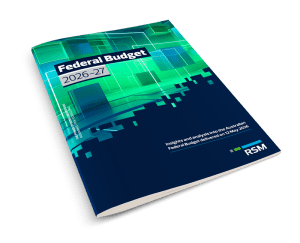
The 2026-27 Australian Federal Budget will be handed down on Tuesday, 12 May 2026.
The Federal Budget sets the strategic direction for Australia’s economic and fiscal policy, delivering key measures that impact individuals, businesses and industries across the country. In a period of heightened global uncertainty, all eyes will be on whether the Government introduces meaningful tax reform, cost-of-living relief and initiatives to support business growth and investment.
At RSM Australia, we break down the most important elements of the Federal Budget 2026 - from CGT, negative gearing changes, business incentives and economic forecasts - helping you understand what the announcements mean and how they may affect you and your organisation.
STAY UPDATED
Subscribe to RSM Australia insights to receive:
- Timely updates and practical commentary
- Impact assessments tailored to your business
- Invitations to Federal Budget seminars and briefings
Frequently asked questions
The 2026 Australian Federal Budget will be handed down by Treasurer Jim Chalmers on 12 May 2026.
Tax reform is expected to remain a major focus heading into this year’s Budget. Potential measures may include changes to personal taxation, investment settings, business incentives and productivity-focused reforms aimed at supporting long-term economic growth.
The Government is expected to consider a range of cost-of-living measures, including tax relief, energy support, healthcare funding, housing affordability initiatives and education assistance to help ease pressure on Australian households.
Potential CGT reform continues to attract significant attention ahead of the 2026 Federal Budget. Proposed measures being discussed include reducing the CGT discount, changes to negative gearing and new tax settings for investment income. These reforms could have major implications for property investors, asset structures and long-term investment strategies. Read more in our article: How proposed CGT reforms could affect property investors and A guide to negative gearing and capital gains tax (CGT) ahead of the 2026–27 Budget
The Government is currently considering recommendations from the ‘Ambitious Australia’ report, which proposes substantial reforms to the Research & Development Tax Incentive (RDTI) regime. Proposed changes include higher refundable thresholds, simplified compliance processes and expanded grant funding aimed at supporting innovation and commercialisation. Learn more in: Release of Ambitious Australia Report heralds significant RDTI changes.
Global trade disruptions, geopolitical instability, inflationary pressures and supply chain challenges continue to shape Australia’s economic outlook. These pressures are expected to influence Government spending priorities, industry support measures and cost-of-living initiatives in the 2026 Federal Budget. Further insights are explored in: Running Empty: Australia’s Triple Shock.
Small businesses remain under pressure from rising operating costs, labour shortages and economic uncertainty. The Government has already flagged targeted tax relief and support measures, although details remain limited ahead of Budget night. Read more in our article: ATO tax relief for small businesses – more detail needed on new measures.
With ongoing cost pressures affecting transport, logistics and operational expenses, fuel and energy relief measures may remain a focus in this year’s Budget. Previous Government support packages provided temporary relief for impacted businesses and industries. Learn more in: Relief package for fuel-hit businesses a welcome reprieve.
The increase in the cash rate to 4.35% tightens financial conditions across the economy. For businesses, this translates into higher borrowing costs for loans, overdrafts, and equipment finance. In practical terms, projects that previously looked viable may now be delayed or scaled back, as the cost of capital increases and return hurdles become harder to meet. Learn more >>
Housing affordability is at political crisis levels, and there are significant fiscal consolidation pressures from structural spending issues. The political risk calculus has shifted markedly since 2019, positioning the Government to introduce potentially significant tax reform. Treasurer Jim Chalmers has indicated that reforms to negative gearing, CGT and trusts are likely to be introduced in the upcoming Federal Budget.