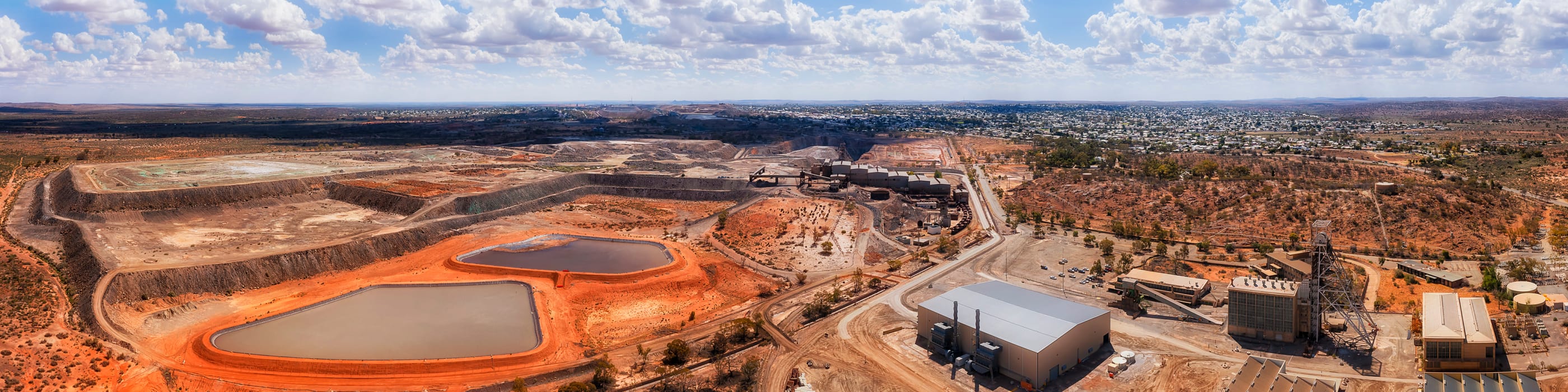
Australia’s net zero sector plan for mining
The Resources Sector Plan (RSP) is an Australian Government framework that sets out how Australia’s resources sector (mining, oil and gas, coal, and critical minerals) is expected to reduce emissions and transition toward net zero by 2050. It is one of six sector‑specific plans that sit underneath the national Net Zero Plan.
The RSP considers both Scope 1 (direct) emissions and Scope 2 (indirect) emissions. Scope 1 emissions in mining primarily stem from fuel combustion for on-site equipment and fugitive emissions, which are byproducts of extraction processes.


Who is impacted by the Resources Sector Plan?
The RSP covers the entire mining sector, including operations with vastly different emissions profiles.
Karien Erasmus, Director, ESG services, RSM views it as short-sighted to group coal, oil and gas extraction with the rest of the mining and minerals sector.
The risk is policy designed to address coal and gas emissions ends up being imposed on minerals producers with fewer levers and lower emission profiles.
Karien Erasmus

“You’ve got a diverse group of operating mining and resources companies across different types of metals, across the mining value chain, who are running very lean ships as it is,” says Karien Erasmus. “Asking these businesses to shoulder decarbonisation costs designed around significant fugitive emissions or large-scale process emissions, creates disproportionate pressure.”
The grouping also risks undermining Australia’s broader net zero strategy.
Minerals critical to the energy transition such as copper, lithium and rare earths sit within the same regulatory bucket as coal and gas. Applying the same decarbonisation expectations across all of them could unintentionally constrain the very supply chains required for global decarbonisation.
Shareholders, investors and regional communities will also be indirectly impacted, particularly regional economies that depend on mining investment.

Are Australia’s net zero targets realistic for the mining sector?
The short answer is no, not under current policy settings.
While no one disputes the need to decarbonise, the RSP asks the mining sector to achieve something it is structurally ill-equipped to deliver. While other industries can lean on efficiency, electrification or process optimisation, mining faces a combination of technical, economic and structural barriers that sharply limit its decarbonisation options.
For targets to be more than empty words, they need to align with technological readiness, infrastructure constraints and the realities of the mining lifecycle and value chain. As it stands, they do not.
Reducing fuel combustion emissions
The RSP advises mining and resources companies to reduce fuel combustion emissions by:
- Improving energy efficiency, using demand flexibility technology
- Transitioning to electric vehicles and equipment
- Switching to low-carbon fuels
To Karien Erasmus who has worked with many mining companies, the problem is that the sector has largely exhausted any easy wins. “The boat has sailed in terms of energy efficiency,” she says. “Reducing fuel combustion emissions for efficiency gains was the starting point. Suggesting companies explore it as a decarbonisation pathway… it doesn’t reflect the current reality for the sector.”
Craig Amos, National Energy and Resources Leader, RSM is equally blunt, describing the plan as largely academic. He argues that for every industry, including mining, “carbon reduction ultimately comes down to power and energy.”

Craig Amos

To emphasise the immense scale of that challenge for the resources sector, Amos points to the Pilbara region in WA. “Rio Tinto and BHP each run multiple utility-scale gas-fired power stations just to keep their operations running.”
Transitioning that energy base requires more than installing solar panels or wind turbines. Erasmus says, “We don’t have a consolidated plan for supporting the mining industry to retain and grow its productivity with alternative energy. For the resources sector, renewable energy deployment first requires integrated infrastructure systems, including transmission networks, storage, transport corridors and supporting services. Without this, decarbonisation pathways remain theoretical rather than operational.”
The same logic applies to large-scale electrification of vehicles and equipment. Erasmus says, “The key constraints to deploying electric vehicles in the resources sector are largely system-level rather than technology-specific. The biggest barrier is access to reliable, large-scale power infrastructure, particularly for remote, off-grid operations. This is compounded by high upfront capital costs, uncertain returns, and operational challenges such as charging downtime and performance under heavy loads.”
Electrification also requires significant changes to mine design and supporting infrastructure, while battery technology and grid integration are still evolving for these use cases. In practice, this means EV deployment in mining is less about replacing vehicles and more about transforming entire energy and operating systems.

Reducing fugitive emissions
The RSP calls for reducing fugitive emissions from coal, oil and gas extraction.
As Karien Erasmus explains, fugitive emissions are fundamentally different to combustion. In practical terms, combustion emissions are a transition challenge whereas fugitive emissions are a containment challenge. This distinction is critical from a policy perspective, as it requires different incentives, technologies and timelines. Fugitive emissions require targeted, often site-specific solutions like methane capture and drainage. This makes them materially harder to reduce, less predictable, and more dependent on operational and geological conditions. This explains why fugitive emissions remain one of the most persistent challenges in the resources sector.
Many of these technologies are “still far away,” according to Jacob Elkhishin, National & Global Lead, ESG Services at RSM.
Erasmus notes that fugitive methane cannot be addressed through a single pathway. “It spans both emerging technologies and established, operational solutions, each with very different scaling challenges.”
Technologies such as regenerative thermal oxidation, flaring reduction and advanced leak detection are available, but their effectiveness is highly site-specific and dependent on operational integration. The International Energy Agency estimates that around 70% of methane emissions from fossil fuel operations could be reduced using existing technologies. This includes leak detection and repair and flaring controls which highlight that the primary challenge is not technology availability, but consistent implementation. Similarly, the NSW Net Zero Commission finds that while these technologies exist, deployment has been limited by operational complexity and site-specific constraints.
In practice, fugitive emissions are a systems challenge which requires continuous monitoring, maintenance and integration into operations, rather than a one-off technology fix.
Scaling up carbon management technologies
In a plan rife with unrealistic expectations, carbon capture and storage (CCS) technologies stand out for being the least likely solution.
“It’s a fairy tale,” says Erasmus. “Carbon capture and storage is often positioned as a key abatement pathway, but it remains capital-intensive and complex to scale. CCS projects require significant upfront investment and supporting infrastructure, including transport and storage networks. In addition to cost, large-scale deployment raises site-specific risks related to land use, water management and long-term storage integrity.”
Others who are also sceptical of CCS as a solution say carbon capture is well and truly on the back burner, suggesting that we won’t be actively removing emissions from the atmosphere for another 20 years.
Cost implications and market readiness
Australia’s net zero ambitions for the mining sector are misaligned with the market.
Although the RSP sets a clear direction signalling our net zero ambition, Erasmus says, “The mechanism underpinning it is not designed to deliver net zero in isolation.as cost and market readiness vary significantly across pathways.” The plan recognises decarbonisation will involve substantial investment and uneven costs across commodities and sites, but it does not quantify a total cost to the sector. It frames costs as a key constraint and focuses on mechanisms to crowd in private capital and reduce the cost of deployment over time.
Relying on private capital to fund decarbonisation without providing a clear financial incentive to do so is unrealistic. Mining companies face strong incentives to maximise production, particularly in the short to medium term. That isn’t compatible with large-scale investment in expensive, unproven abatement technologies.
Deploying renewable energy generation is often touted as a decarbonisation pathway for remote mines without access to grid power, and some mine sites certainly have done so.

Jacob Elkhishin

However, as Jacob Elkhishin stresses, these decisions are heavily dependent on the life of the mine and site economics. “Installing renewable generation near a mine costs a lot of money,” Elkhishin says. “The return on investment depends on how long the life of the mine is.”
“There is a fundamental mismatch between the lifespan of energy infrastructure and the life of mining assets,” Erasmus says. “Renewable systems are designed to operate for decades, but many mines have relatively short/shorter remaining operational cycles. Without clear pathways for reuse, repurposing or integration into broader energy systems, this creates stranded asset risk and complicates investment decisions.”
While renewable energy and electrification are relatively mature, they are highly capital-intensive and depend on supporting infrastructure.
Other pathways, such as methane abatement and CCS, are either site-specific or not yet deployed at scale, creating uncertainty around cost and performance. CDP Climate Change Reports data shows that even when emissions reduction opportunities have relatively short payback periods they remain under-implemented. This highlights that there are deeper challenges than cost constraints. Capital allocation, risk and system integration must be addressed for mining to collectively move forward.
Safeguard Mechanism and Australian Carbon Credit Units (ACCUs)
Safeguard baselines are set by the Clean Energy Regulator under government-defined rules, not by companies themselves.
For most resources facilities, they’re based on emissions intensity and actual production, with a declining trajectory applied over time. While the framework is standardised, there is some flexibility through re-baselining and regulatory applications, which means baseline setting becomes both a technical calculation and an ongoing regulatory engagement process. However, the combination of high targets and regulatory pressure in the form of the Safeguard Mechanism does not equate to genuine emissions reduction.
At the most basic level, the Safeguard Mechanism translates emissions targets into a direct cost. However, this does not necessarily translate into effective decarbonisation. Where on‑site abatement is not technically or economically feasible, offsetting emissions by purchasing carbon credits is the path of least resistance. And so, in practice, Safeguard compliance can default to offsets rather than abatement.
“For a number of our clients, the targets set under the Safeguard Mechanism are already challenging to achieve operationally. As a result, compliance is often met through the purchase of additional carbon credits,” Erasmus explains. This effectively becomes a recurring operating cost rather than a driver of structural change. “At current price levels, the cost of carbon is still low enough for companies to absorb — which means there is limited immediate incentive to fundamentally change operations.”
This again highlights the broader limitation: the Safeguard Mechanism can price emissions, but it cannot on its own enable the systems, infrastructure and technologies required to reduce them.
The upcoming review of the Safeguard Mechanism may change this equation, but it would require the cost of emissions to be significantly steeper for there to be enough financial incentive to decarbonise. Higher compliance costs also aren’t a perfect solution so long as technical limitations to reduce emissions persist.
Opportunities, financial incentives and funding pathways

For Amos, sector-specific targets for net zero emissions are largely irrelevant. In his view, it’s all about energy. “You can’t solve for carbon emissions on a national basis, without solving for energy security and continuity on a national basis,” he says. Without that foundation, the costs keep rising while the pathway forward remains unclear.
The opportunities here are less about what the mining sector can do and more about what makes sense and where government can take the lead. Structural energy reform, argues Amos, must be tackled first before anything else can follow.
Erasmus shares that view, saying that installing scalable regional supply of infrastructure “is a government mandate that cannot and should not sit in the private sector.” She believes that if government led the way, providing energy, transmission, water and transport infrastructure, whether through incentives, policy support or subsidised projects, the mining sector could plug into systems designed for longevity and community, rather than carrying the risk of stranded assets alone.
There is also an opportunity to rebuild market confidence, says Amos, calling for clearer, more credible transition planning. “The mining sector makes capital allocation decisions that go into the tens of billions of dollars, with time horizons that stretch decades,” he says. A coherent energy transition plan that is supported by correlating policy and infrastructure planning, that is realistic and achievable, could provide certainty and unlock capital that is currently sitting on the sidelines.
Innovation and technology
Innovation and technology are critical to overcoming the barriers to decarbonisation in the mining sector. However, the pace of technological development and deployment remains a significant challenge.
The cost profile of the transition is uneven. Core enabling technologies such as renewable energy and battery storage have seen significant cost reductions over the past decade, improving the economics of electrification and energy supply. However, other pathways (including fugitive methane abatement, carbon capture and storage, and large-scale fleet electrification) remain capital-intensive, site-specific or not yet deployed at scale.
Erasmus notes “This creates a practical tension: while parts of the transition are increasingly cost-competitive, others are constrained by technology maturity, infrastructure availability and operational integration. As a result, the challenge is not a single cost barrier, but the alignment of cost, readiness and system capability across different abatement pathways.”
Elkhishin highlights the importance of innovation but warns of the limitations in current technological readiness. He explains, “Many of the technologies we need to achieve net zero are still far away. The gap between what’s available now and what’s required to meet these targets is significant.”

Practical steps for Australian mining companies preparing for net zero emissions
Reporting was the first step towards net zero. The next step involves strategic and operational transformation. Frameworks such as the Transition Plan Taskforce reinforce the need to move beyond disclosure toward decision-useful, investable transition pla


Segment abatement pathways by maturity and cost:
Some tonnes are more equal than others. Low-cost abatement exists, but not where the biggest emissions sit. Fugitive emissions and heavy fleet decarbonisation remain harder and less scalable than power supply. Consider categorising emission reduction initiatives to allow for capital planning and the market, where required, to catch-up

Integrate decarbonisation into capital allocation as early as possible:
Currently, carbon competes with production for capital. Short mine lives, volatile commodity prices and Safeguard costs mean decisions are commercial first, climate second, unless integrated properly.

Plan for infrastructure, not just technology:
Remote operations, limited grid access and infrastructure bottlenecks are often the real constraint, not the technology. The question is not just whether infrastructure is available, rather how the operation is designed to use it efficiently.

Reduce reliance on offsets over time:
Reducing offset reliance is less about external markets and more about improving controllable operational performance.

Embed operational change:
Methane abatement depends on discipline, integration and site-specific practices, not just deploying new technology. The adage rings true: You can’t manage what you can’t measure.

Link decarbonisation to market positioning:
The transition is being driven as much by markets as by policy. Iron ore, LNG and critical minerals will increasingly compete on carbon intensity, not just cost.



Have a follow up question for our team?
Get in touch
Have a follow up question for our team?
Get in touch