
 Linkedin

 Facebook
 Email
 more
The CFO Standard




Why CFOs must move beyond reporting to shape business performance
The role of the CFO is evolving rapidly. No longer focused primarily on financial reporting, cash flow and historical performance, today’s strategic CFO is expected to play a central role in business strategy, finance transformation and decision-making.
For decades, the CFO’s role was relatively well understood:
- Protect the balance sheet.
- Manage cash flow.
- Deliver accurate reporting and demonstrate actual versus budget outcomes.
Success was largely measured by how efficiently the finance function could report on what had already happened. Today, economic uncertainty, technological change, regulation, talent pressures and shifting customer expectations are forcing finance leaders to look further ahead.
CFOs and finance teams are increasingly expected to turn trusted data into forward-looking insight, using scenario planning, data analytics and AI in finance to support faster, better-informed decisions. The shift is no longer simply from reporting to supporting the business, but towards a finance function that actively helps shape business performance.

High-performing finance functions do more than report what happened.
They help the business understand what happens next.
From financial reporting to forward-looking insight.
Many CFOs and finance teams continue to struggle providing timely responses to relatively simple strategic questions like:
Q:
What happens if labour costs increase by 10%?
Q:
Which customer segments genuinely create value?
Q:
How resilient is the business if demand softens?
Q:
Where should capital be deployed to generate the greatest long-term return?
These are not accounting questions.
They are operational and strategic questions which boards, investors and executives expect their CFOs to help answer.
Yet many finance functions remain heavily focused on reporting what has already occurred and producing extensive reporting packs showing revenue variances, margin movements and budget differences.
According to a Gartner study on CFO Leadership Perspectives, “executing finance transformation” was a leading priority for CFOs for the past three consecutive years.
As well as modernising technologies and processes through AI and automation, closing the digital talent gap to enable successful transformation efforts was also a key goal in 2026.
Planned areas of spending included:
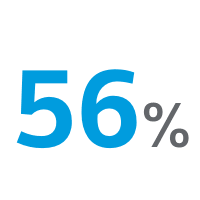
on AI and automation tools
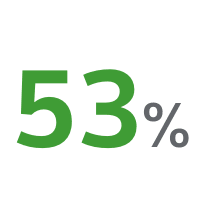
on data and analytics
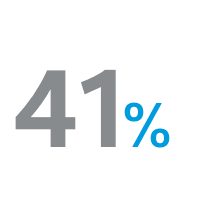
on budgeting and financial planning and analysis
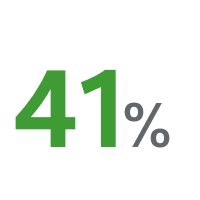
on business intelligence
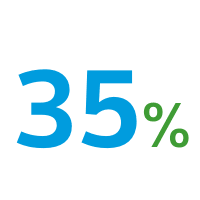
on cloud applications
We have been fortunate to see the results of these efforts in our clients’ finance functions, confirming that outperforming organisations create an impressive advantage by turning trusted data into faster, higher-quality decisions.
Leading CFOs are redesigning finance as an enterprise decision engine – connecting financial, operational and external data through modern platforms, automation and business intelligence. The goal is not simply to produce more information, but to identify what matters most and act on it. By linking financial outcomes to customer behaviour, market conditions, operational constraints, pricing and investment choices, the CFO moves from custodian of information to architect of decision-making.
High-performing finance leaders are able to move conversations beyond reporting and towards insight.
Boards rarely need another discussion labouring over why revenue finished 3% below budget.
What they really want to understand is:

Why it happened

Whether it is likely to continue

What management intends to do about it
The distinction may seem subtle, but it fundamentally changes the role finance plays within an organisation.
The conversation changes from measurement to influence, and from observation to action.

SUBSCRIBE TO THE CFO STANDARD
Subscribe now to read the latest insights as soon as they’re released.
Where scenario analysis becomes particularly powerful
Traditional budgets often assume a single, stable version of the future – even as markets, customer preferences and economic conditions continue to evolve.
A CFO creates value by helping the organisation prepare for multiple scenarios through driver-based models, rolling forecasts and clearly defined trigger points to test multiple outcomes. In uncertain markets, the objective is to be ready faster and adapt decisions as new information emerges.
Technology and artificial intelligence continue to accelerate this evolution, with activities that traditionally consumed finance teams becoming increasingly automated.
Strategic finance operating model
 Build efficiency
Reduce manual effort through process simplification and automation.
 Create insight
Develop forecasting, scenario planning and performance measurement capabilities.
 Enable intelligent decision-making
Use AI and real time financial, operational and sustainability data to support strategy, planning and capital allocation.
This evolution is as much about behaviour as technology. Finance teams need commercial curiosity, data literacy and the confidence to challenge assumptions, while CFOs must create an environment in which insight travels quickly and constructive debate is encouraged.
Moving beyond financial reporting
Governance, controls and financial discipline remain key for finance teams, as does the importance of data security and an AI governance framework. Talent will continue to evolve and there will be changes in the workforce skills and capabilities required of finance teams.
Ultimately, the organisations that thrive will be those where the finance function is embedded in strategy, financial planning, risk management and operational decision-making. Not because finance owns the numbers, but because finance helps the business understand what the numbers actually mean and how to shape the narrative. The chief financial officer (CFO) is increasingly expected to act as a strategic partner to the chief executive officer, senior executives and other business leaders, helping shape financial strategy and support long-term performance.
That requires more than strong financial reporting, cash flow management and accounting and finance capability. It also demands leadership skills, commercial judgement and the ability to use digital transformation, data and technology to improve financial management and decision-making across the organisation.
While it is useful to know precisely where you've been, it's far more valuable to know where you're going, whether the route still makes sense, and perhaps most importantly, whether you've packed enough fuel for the journey.

HAVE A QUESTION?
Get in touch
Ready to strengthen your finance function?
RSM’s CFO Advisory team can help you move beyond reporting, improve financial planning and turn data into better strategic decisions. Get in touch today.
Ready to strengthen your finance function?
RSM’s CFO Advisory team can help you move beyond reporting, improve financial planning and turn data into better strategic decisions. Get in touch today.
Ideas and insights


