
 Linkedin

 Facebook
 Email
 more

thinkBIG
Cutting through the AI hype
Chapters
1 The AI journey every business is taking
Learn about AI, how businesses are using it, and what the latest trends show us
2 Understanding AI risks
Common AI risks and legal considerations, plus how to protect your business
3 Developing an implementation roadmap
Step-by-step implementation roadmap for effective AI adoption
4 Making AI part of everyday work
Leadership’s role in AI adoption and how to overcome staff hesitation
5 Measure, iterate and improve
Why AI adoption can never be ‘set and forget’
Trinity is a multi-generational family business delivering fitout refurbishment and construction projects across NSW.
Managing Director, Ben Lloyd, says that – like many businesses – Trinity had made a significant investment in its technology stack over the years, including exploring the potential of AI.


“For us, AI was never just an efficiency play. We saw an opportunity to give our people, and through them our clients, faster and clearer access to information.
"As a builder, our team needs to wear many hats. On any given day, they may be acting as engineers, designers, lawyers, accountants, programmers, planners and more. AI helps us test information, supporting our people to make informed decisions and keep projects moving.”
From the outset, Trinity took a considered approach to adoption. Security, consistency and governance were important, as was ensuring AI was introduced in a way that complemented the expertise already within the business.
“We wanted everyone operating within the same controlled environment rather than using different tools independently. It gave us greater confidence around how AI was being accessed and allowed us to develop a more consistent approach across the business.
"Initially, we looked to our existing software providers, opting into beta testing and early adoption wherever possible. We expected AI would naturally be integrated into the platforms and workflows we already used. As time went on, it became clear that the larger AI models were advancing faster, so we pivoted. While more bespoke solutions may have a role in the future, implementing an LLM offered immediate value.”
Trinity selected an enterprise-level version of Claude and initially introduced commercial licences to a small pilot group.
An experienced project manager with broad operational knowledge of the business was appointed as Trinity’s ‘Tech and Operations Readiness Lead’, helping identify where AI could genuinely support the way teams work. Trinity also engaged an external mentor already using Claude extensively, allowing the pilot group to learn from practical experience. The pilot has since expanded, with around half of Trinity’s workforce now having access to Claude with plans to progressively transition the whole business.
Trinity has focused heavily on building AI literacy and encouraging employees to experiment, learn and share their experiences.
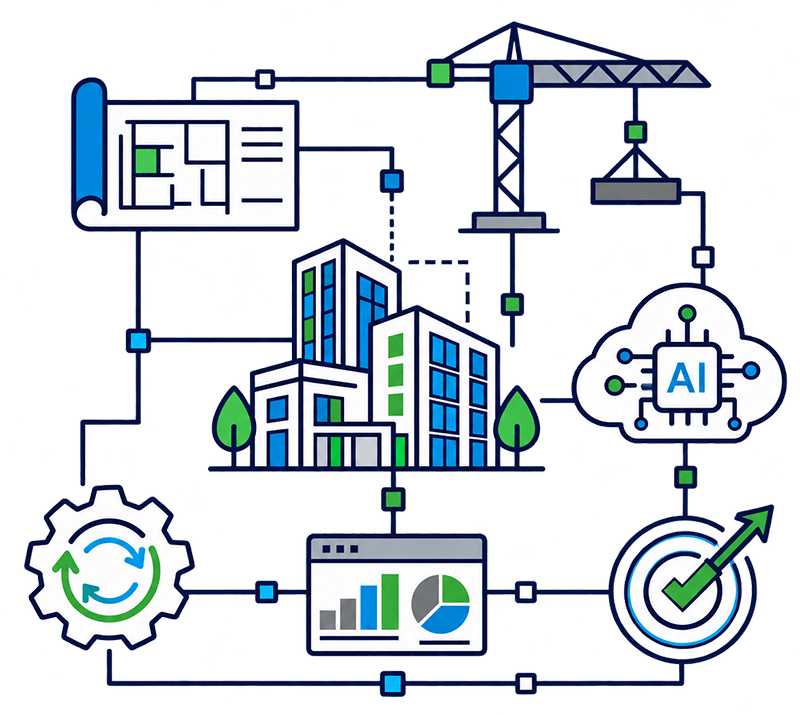
Every Monday, the business holds a ‘Claude Showcase’, where employees demonstrate how they have used the technology, what worked and what they learned. This has allowed practical applications and lessons to be shared across different roles and levels of AI experience.
“We want our people to take ownership of developing their own AI capability, but our responsibility as a business is to give them the right tools, training and environment to do that,” says Ben.
“The weekly sessions have been particularly valuable because people learn from each other. Someone might demonstrate an approach that another person had never considered, and suddenly that knowledge is being shared across the business.
“Our people have significant knowledge and experience in construction. AI doesn’t replace that. What it can do is help them access information differently, challenge their thinking, explore another perspective and get value from the expertise they already have.
“We see AI becoming another capability our people develop alongside their existing skills. The opportunity for us is to combine the knowledge and judgement of our people with technology that can help them do even more with it.”
This case study is featured in our thinkBIG report, Cutting through the AI hype: A practical guide to AI for SMEs.
Contributors








Ready to put AI to work in your business?
Whether you're exploring AI for the first time or looking to build on existing capabilities, RSM can help you identify opportunities, manage risks and develop a practical approach to AI adoption.
Ready to put AI to work in your business?
Whether you're exploring AI for the first time or looking to build on existing capabilities, RSM can help you identify opportunities, manage risks and develop a practical approach to AI adoption.