Linkedin

 Facebook
 Email
 more


Earlier this year, AUSTRAC’s Operation Claw identified hundreds of millions of dollars in suspected fraudulent loans across ten major banks.
In doing so, they revealed a systemic weakness in Australia’s financial systems.
The suspected fraudulent activity included inflated incomes, false employment, fabricated or unverifiable business activity, falsified documents, and offshore or third-party funds being used for settlements or mortgage repayments.
What makes this a systemic vulnerability is that the same weaknesses could be exploited across multiple lenders.
The warning signs identified by AUSTRAC occurred across banks covering the vast majority of Australia's mortgage market, with the same brokers, accountants and law firms appearing across multiple applications.


Many lenders must now confront an uncomfortable question about their risk governance and control environment:
Are your mortgage fraud controls designed for the way fraud occurs today, or the way it occurred five years ago?
Why control design is critical to managing fraud risk
Fraud risk needs to be considered not only through the lens of whether a control exists, but whether the control remains capable of preventing or detecting the fraud it was designed to address.
Most lenders already have controls around identity, serviceability, income verification, supporting documentation, brokers, exceptions and approvals. However, there is a key difference between having a control and having an effective control. A process can be operating exactly as designed and still fail to identify fraud if the evidence passing through it can now be convincingly manufactured or manipulated.
After all, this is not the first time new technology has enabled widespread fraud and it won’t be the last. When colour printers and copiers became widely accessible, cheque fraud and counterfeiting rose. Controls had to evolve in response, which is why security features such as watermarks, microprinting and chemically sensitive paper are now commonplace.
The same principle applies today. Technology and fraud have both evolved, and your controls must evolve with them.
AI forgeries change what evidence can be trusted
One of the biggest factors your controls must now account for is artificial intelligence (AI). Generative AI has lowered the cost and skill needed to produce convincing forgeries of supporting material. Payslips, bank statements, tax records and other documents can potentially be fabricated or altered quickly, while retaining plausible figures, formatting and internal consistency.
This changes the economics of fraud in three ways:
- Realism: fabricated evidence can be harder to detect with a traditional visual check
- Scale: once a successful approach has been developed, it can be replicated across many applications
- Access: sophisticated document manipulation no longer requires specialist technical skills, so the pool of potential offenders grows.
For lenders, now is a good time to reassess your control environment and consider:
How much of your approval process depends on evidence that can be manufactured?
Why mortgage fraud is a systemic vulnerability
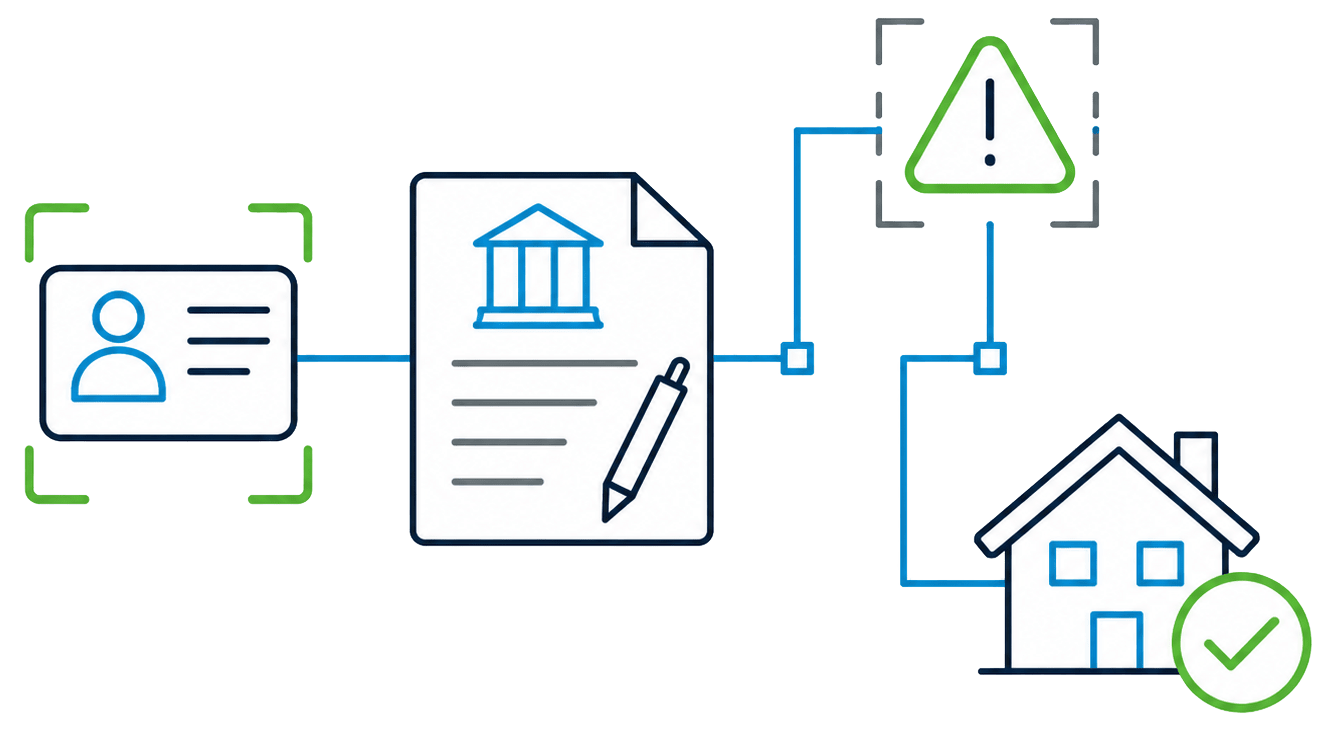
The core issue here is that a mortgage application is part of our wider financial system. It doesn’t exist in isolation. Information may pass between applicants, brokers, accountants, lawyers, conveyancers, employers and lenders before credit is ultimately approved.
If each participant relies on evidence produced earlier in the chain without independently verifying the underlying information, false information can acquire credibility as it moves through the process.
The challenge for lenders is that AI-enabled fraud can exploit multiple points across the mortgage origination process, turning what may appear to be individual control weaknesses into a connected fraud risk.
AI-enabled mortgage fraud: control-risk chain
The findings from AUSTRAC's Operation Claw illustrate why the systemic nature of this risk is important. Simply put, an individual application may not contain enough information to reveal the fraud.
AUSTRAC found recurring intermediaries and common warning signs across multiple lending institutions. It has subsequently encouraged lenders to review loan portfolios for fraud patterns, verify identity, employment and income, identify common customer details across applications, and monitor unusual activity involving brokers and other third parties.
In other words, the clearest evidence of fraud may sit across a portfolio of applications rather than inside any one of them.
This changes how fraud controls need to be designed and tested.
Four mortgage fraud controls to pressure test now

Verify claims at the source
Many traditional controls focus on checking whether a supporting document looks authentic. However, a document is only supporting evidence for a claim the applicant is making. A payslip may support a claim about employment and income, or a bank statement may support a claim about cash flow or savings.
If you consider what your control is trying to achieve, the goal of document verification is clearly to confirm that the applicant’s claim is true.
Where the information is material to a lending decision, stronger controls would independently corroborate the underlying claim against a reliable source.
Open banking is one example. Through the Consumer Data Right, an applicant can consent to their bank sharing account and transaction data directly with the lender. The lender can then check claims about income deposits, spending and existing commitments against the bank's own data, rather than against a document that could have been altered along the way.
Pressure test:
Determine whether material information such as identity, employment, income, liabilities and source of funds is being independently corroborated where reliable sources are available, particularly for higher-risk applications.
This approach is consistent with APRA's APG 223 Residential Mortgage Lending, which sets out APRA's guidance on sound residential mortgage lending practices and loan origination.
As it becomes easier to create convincing documents, the distinction between document verification and source verification will only become more important.

Look for patterns across applications
Operation Claw identified repeated use of brokers, accountants and law firms across applications, while AUSTRAC is expressly encouraging lenders to look for common customer details across multiple applications.
Often, these patterns only become visible when considering applications collectively.
That means fraud detection needs to extend beyond transaction-by-transaction assessment.
Pressure test:
Are you set up to detect relationships and unusual concentrations across customers, applications, brokers, referrers, accountants, employers, contact details, locations and other relevant attributes?
Detecting these relationships can reveal what an individual application assessment cannot: the network surrounding the application. This is particularly important when dealing with organised or coordinated fraud activity.

Test third-party intermediaries as well as borrowers
According to ASIC Report 840, more than 80% of home loans are currently provided through mortgage brokers.
At that level of market penetration, intermediary risk is far from peripheral to the lender's fraud-control environment.
Brokers, referrers and other professionals can provide valuable information and assurance. But their involvement should not automatically increase the level of trust placed in an application.
Pressure test:
Consider whether monitoring looks beyond the individual borrower and tests the performance and risk characteristics of origination channels and individual intermediaries.
This could include analysing application volumes, policy exceptions, documentation deficiencies, approval and decline patterns, subsequent fraud referrals and unusual concentrations associated with particular intermediaries.
You don’t need to treat third parties as inherently suspicious. Just recognise that where applications enter the organisation through a third party, the channel itself becomes part of the fraud-risk environment.

Test whether your controls can be defeated
Traditional control assurance may confirm that identity checks are completed, income is verified, serviceability is assessed, approvals are recorded and exceptions are escalated.
All of those controls can be operating exactly as designed, but that only proves control compliance.
To achieve fraud resilience, you need to test if the control can be circumvented using current fraud techniques.
Pressure test:
Take realistic, contemporary fraud scenarios and trace how they would move through the approval process. For example:
- What happens when income documentation is fabricated but internally consistent?
- What happens when the stated employer exists, but the applicant's employment does not?
- What happens when apparently unrelated applications share an intermediary or other common attributes?
- What happens when settlement funds come from an unexpected third party?
The goal is to determine whether the process responds to the threat as it exists today. A control can operate exactly as designed and still fail if the assumptions behind its design no longer hold.
Could your controls detect the red flags identified in Operation Claw?
Fraud prevention should ultimately be measured by how effectively fraudulent applications are prevented from reaching approval. As AUSTRAC concluded in Operation Claw, identifying mortgage fraud before loan approval is significantly more effective than attempting to recover funds once a loan has been established and the money has moved.
A practical starting point for lenders is to take the behaviours and indicators emerging from Operation Claw and ask: Would our existing controls identify these behaviours before approval?
And, just as importantly: Could we demonstrate how?
Those two questions will help you test whether source verification, fraud analytics, intermediary monitoring, escalation mechanisms and control assurance work together against the way mortgage fraud is actually occurring.
How RSM can help you strengthen your fraud prevention strategy
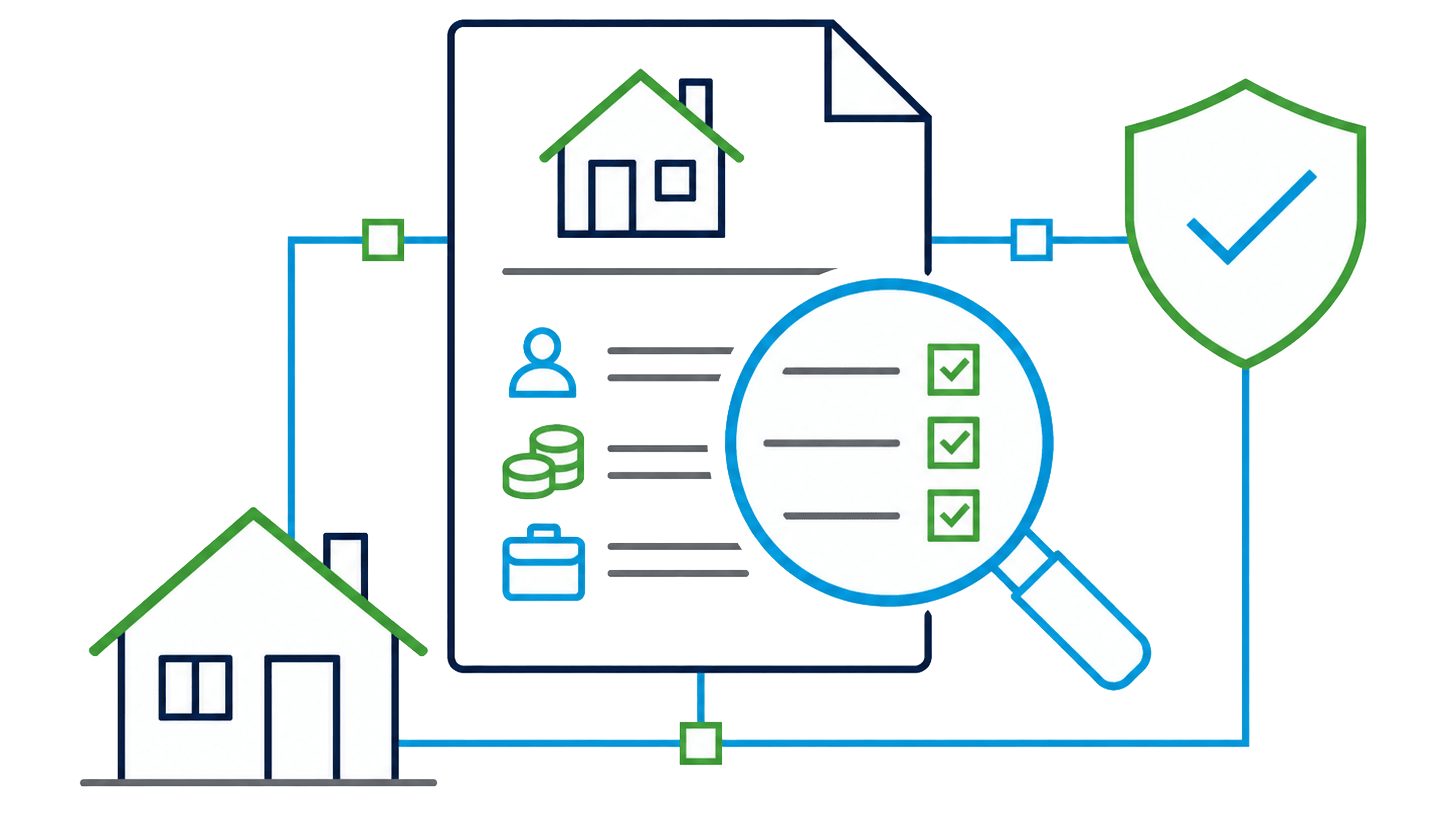
At RSM, our Fraud & Forensic specialists work with organisations to independently pressure-test fraud-control environments against contemporary fraud risks. The goal is to help you determine whether the controls you already rely on still work against the fraud risks you face today.
For mortgage lenders, that could include reviewing loan origination and approval controls, assessing whether controls adequately respond to emerging fraud typologies, analysing lending populations for patterns and intermediary concentrations, testing existing controls using fraud scenarios, and identifying opportunities to strengthen prevention and detection.
If you would like to discuss what a targeted mortgage fraud control pressure-test could look like for your lending environment, please contact our RSM Fraud & Forensic team.
Have a question?
Get in touch
Ideas and insights